Answer first
The short answer
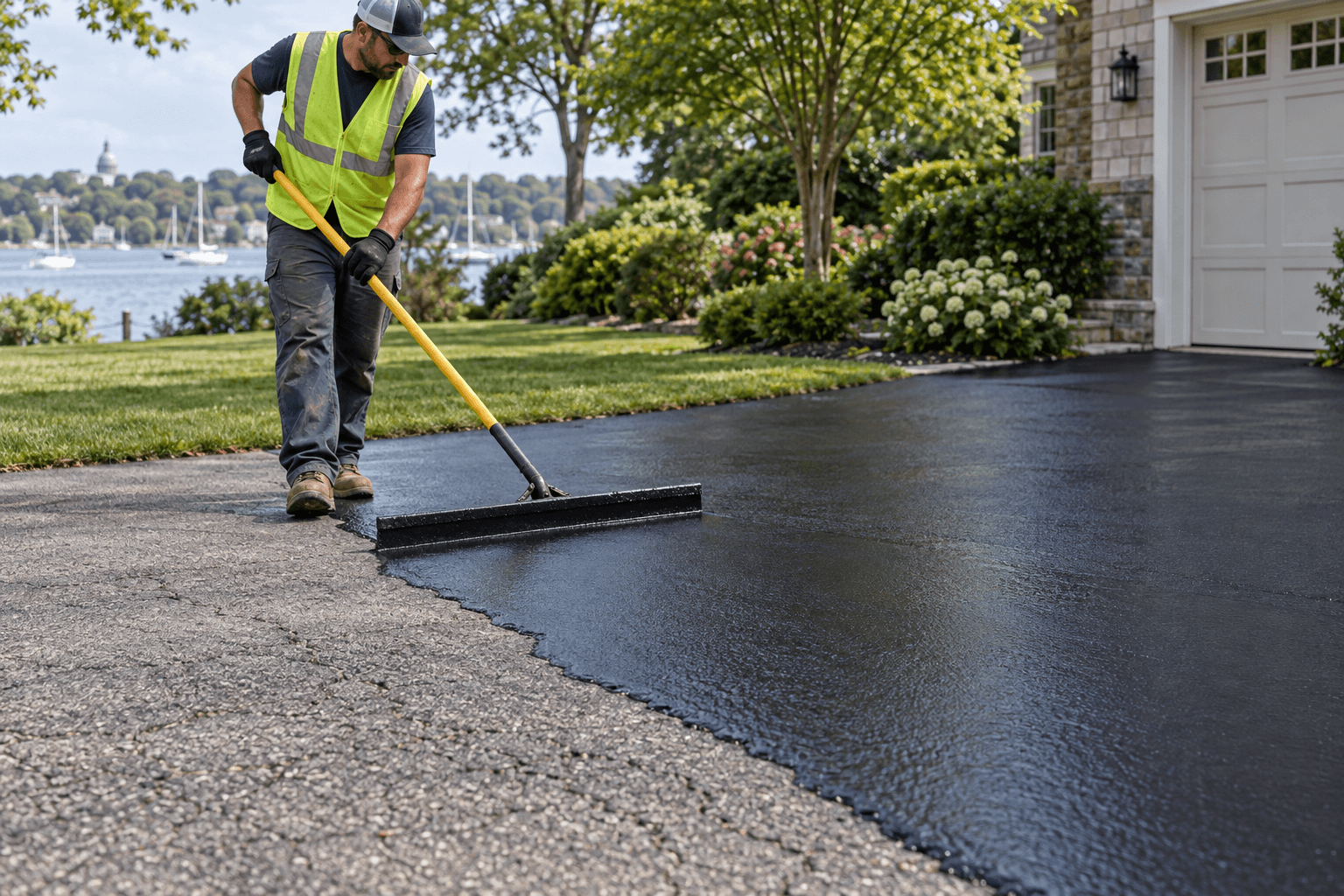
Do not sealcoat a brand-new driveway immediately or follow a fixed calendar without inspecting the pavement. The Asphalt Institute says a well-designed, properly constructed low-traffic driveway or parking lot should not need sealing for roughly two to five years, depending on climate and the original work. After that, condition matters more than the date: sealcoating is intended for structurally sound asphalt showing oxidation, small surface voids, or early raveling—not pavement with base failure, active potholes, or widespread structural cracking.
Florida heat, strong sun, frequent rain, humidity, irrigation, and long growing seasons all affect pavement and the window available for maintenance. Those conditions do not create one universal sealcoating interval. Traffic, shade, drainage, asphalt condition, previous coatings, and the specific product also influence the decision.
A site review should separate cosmetic fading from distress that needs repair. Sealcoat forms a protective surface treatment; it cannot rebuild a weak base, level a depression, or permanently bridge moving cracks.
01 — Practical guidance
Use pavement condition—not color alone
A faded gray surface can indicate oxidation, but appearance by itself does not prove that sealcoating is the right next step. Look for a surface that remains generally stable and drains as intended. Early raveling, dryness, small surface voids, and limited non-structural cracking may support a maintenance conversation.
Loose or broken areas, potholes, depressions that hold water, edge collapse, repeated cracking, or interconnected alligator-style cracks call for closer diagnosis. Those signs can point to localized failure, drainage trouble, or loss of support below the surface. Necessary crack or patch repairs should be addressed before a coating is considered.
02 — Practical guidance
Wait before sealing new asphalt
New asphalt needs time to cure and release surface oils. The Asphalt Institute advises that a sound low-traffic driveway should not require sealing for approximately two to five years. Product manufacturers may publish shorter minimum cure periods for compatibility, but a minimum application threshold is not the same as a recommendation that a new driveway needs immediate coating.
The appropriate timing should account for the asphalt surface, the sealer being proposed, and the product manufacturer's current technical data. Applying a coating too soon can interfere with adhesion and does not correct construction or drainage issues.
03 — Practical guidance
Choose a dry curing window
Water-based pavement sealers cure as water leaves the applied film. Warm pavement, sunlight, airflow, and lower humidity generally help; shade, high humidity, cooler temperatures, and approaching rain slow the process. Florida may be warm for much of the year, but afternoon storms and humid nights can make the usable window narrower than the temperature suggests.
Published manufacturer requirements vary. Common technical guidance calls for a dry surface, temperatures around 50°F or higher and rising, and no imminent rain, while some products recommend warmer conditions or a longer rain-free period. The exact specification for the selected product controls.
- Check both pavement and air temperature, including the overnight forecast.
- Avoid application when rain, fog, heavy dew, or irrigation could wet uncured material.
- Allow more curing time in shade, high humidity, or marginal temperatures.
- Keep vehicles and foot traffic off until the applied system is ready under actual site conditions.
- Coordinate sprinklers, landscaping work, deliveries, and parked vehicles before work begins.
04 — Practical guidance
Repair and preparation come before the coating
A durable application begins with a clean, dry, sound surface. Dirt, loose material, vegetation, oil, and incompatible previous coatings can interfere with bonding. Cracks and failed areas should be evaluated and treated with methods suited to the distress.
Sealcoating is best viewed as one part of pavement preservation. It can renew an oxidized surface and help limit weather exposure, but it should not be presented as a structural repair or a substitute for correcting water movement.
Next step
Is your asphalt ready for maintenance?
A site review can separate surface aging from damage that should be repaired first. Request a project-specific estimate for your Polk County driveway or parking area.
Common questions
Frequently asked questions
How often should an asphalt driveway be sealcoated in Florida?
There is no universal schedule. The Asphalt Institute indicates that a properly built low-traffic driveway may not need sealing for roughly two to five years. After that, the surface condition, drainage, traffic, previous coatings, and selected product should guide the decision.
What is the best season to sealcoat in Florida?
The best time is a reliably dry window that meets the selected product's pavement-temperature, air-temperature, humidity, rain, and curing requirements. Florida's warm weather can help, but high humidity and frequent storms may delay curing.
Can sealcoating fix cracks or potholes?
No. Crack treatment and patching are separate operations, and structural or base-related failure may require more extensive work. Necessary repairs should be evaluated before sealcoat is applied.
How long should vehicles stay off fresh sealcoat?
Follow the product specification and site-specific instructions. Many products call for at least 24 hours in suitable conditions, while shade, humidity, cooler temperatures, or multiple coats can require longer.
Should a new asphalt driveway be sealed right away?
Generally, no. New asphalt needs to cure, and a well-designed, properly built driveway should not require immediate sealing. Have its condition assessed instead of coating it solely because it is new.