Short answer: In Polk County, the cost of a gravel driveway depends mostly on four things: how much base work the ground needs, which stone you choose, how long and wide the drive is, and the drainage needed to keep Florida rain from washing it out. Gravel usually costs less upfront than asphalt but needs regular top-ups and regrading. The only reliable number is a written estimate based on a site visit.
If you’re comparing contractors, ask each one for a per-square-foot quote with the base depth, stone type, and drainage work spelled out, so the numbers are comparable. Independent guides list typical market ranges (see the comparison below); call A1 Paving for an on-site quote.
The five things that set the price
1. Base and site preparation
Most of a gravel driveway’s life depends on what’s underneath it. Prep can include clearing roots and brush, removing soft or organic soil, shaping the grade, and placing and compacting a base layer. On Polk County’s sandy or low-lying lots, this step can be a large share of the job. Gravel spread straight onto loose sand tends to rut, sink, and migrate into the yard. When one quote is much lower than the others, the base is often where the difference is.
2. Stone type
Common Central Florida driveway materials include crushed concrete, limerock, granite, #57 stone, and crushed asphalt millings. They differ in price, in how well they lock together under traffic, in dust, and in color and texture. Angular, crushed material usually packs tighter than round stone, which can roll and scatter. Some materials are better for the base layer and others for the top. A1 Paving’s guide on choosing gravel for a Florida driveway walks through the layers.
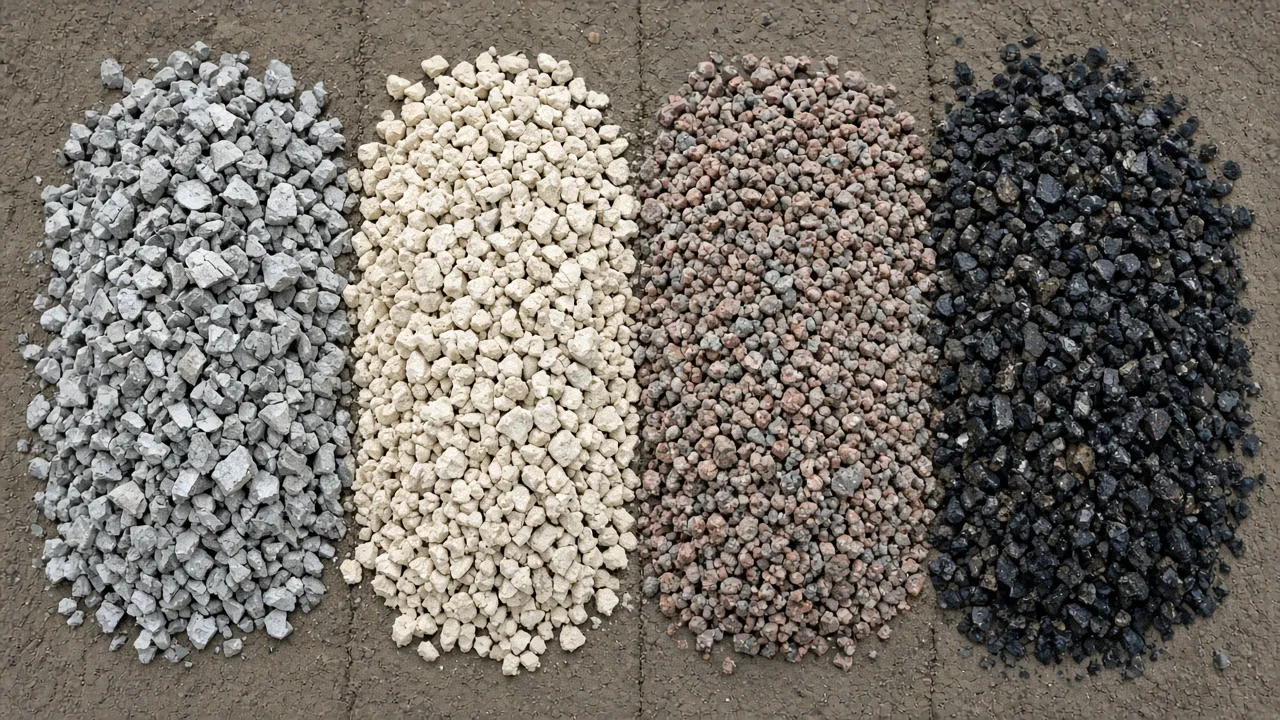 Illustration: common driveway stone options in Central Florida.
3. Size and depth
Cost scales with square footage and the depth of each layer. A long rural approach costs more in total but can cost less per foot, because equipment can work in straight runs. Short residential drives with curves, tight turns, and a lot of hand work around mailboxes, culverts, and landscaping can cost more per foot. Turnarounds and parking pads add area that’s easy to forget when you measure.
4. Drainage
Florida storms can drop heavy rain in a short time, and water is the main thing that destroys gravel driveways. A well-built drive has a crown (a slight high point in the middle) or a steady cross-slope, side swales to carry water away, and sometimes a culvert where it crosses a roadside ditch. Each of those adds cost upfront, and leaving them out is the most common reason gravel washes out after a summer or two.
5. Edges, aprons, and access
Edging such as stone borders, timbers, or a paved strip keeps gravel from spreading into the lawn. Where a driveway meets a public road, local rules may call for a paved apron or a permit. Check with your city or Polk County before you build, and ask your contractor who handles any permit. Access for trucks and equipment also affects labor: a narrow gate or a soft field can slow the job.
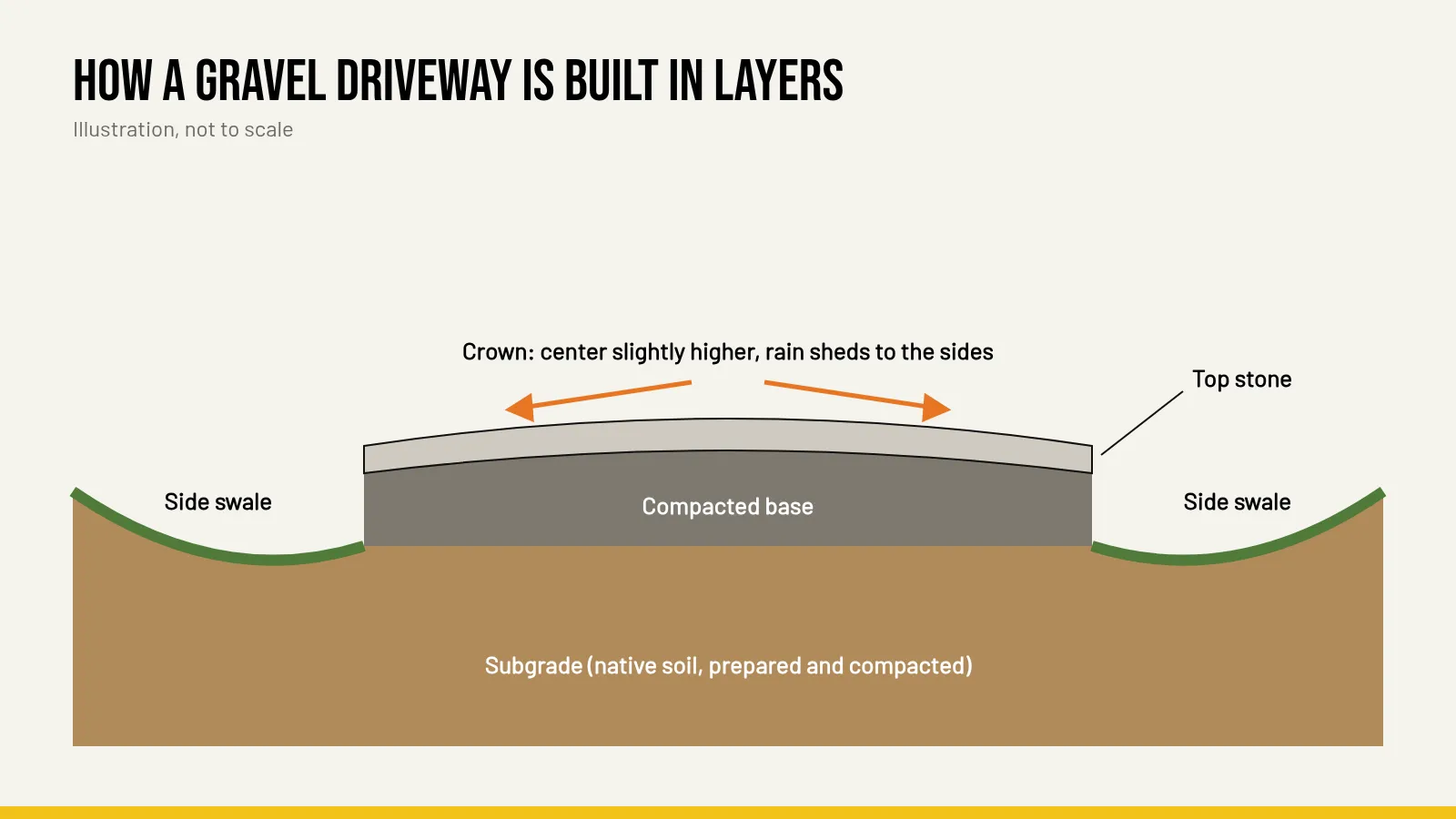 Illustration: how a gravel driveway is built in layers.
Gravel vs asphalt: cost and upkeep
| Gravel | Asphalt | |
|---|---|---|
| Upfront cost | Usually lower | Usually higher |
| Ongoing upkeep | Periodic top-up stone and regrading | Crack filling and periodic sealcoating |
| Drainage | Water can soak through the stone; still needs grading | Sheds water to the edges; needs grading and swales |
| HOA rules | Often not allowed in managed communities | Widely accepted |
| Everyday feel | Loose; can be dusty, noisy, or rutted | Smooth, clean surface |
| Repairs | Small fixes are often DIY-friendly | Patching usually needs a contractor |
Independent cost guides publish per-square-foot ranges for both materials in Florida and the Lakeland–Winter Haven area (for example, BuildPriced and ClearCost). They’re useful for rough budgeting, but they are typical market ranges, not A1 Paving prices. For a real number, call A1 Paving for an on-site quote.
Some property owners split the difference with a gravel drive and a paved apron at the road, or a gravel drive with an asphalt parking pad near the house. If you’re thinking about paving later, a well-built gravel base can sometimes serve as the starting point. Ask your contractor whether it would need rework first. A1 Paving’s asphalt paving service page covers the paved option.
Is gravel right for your property?
Gravel tends to make sense for:
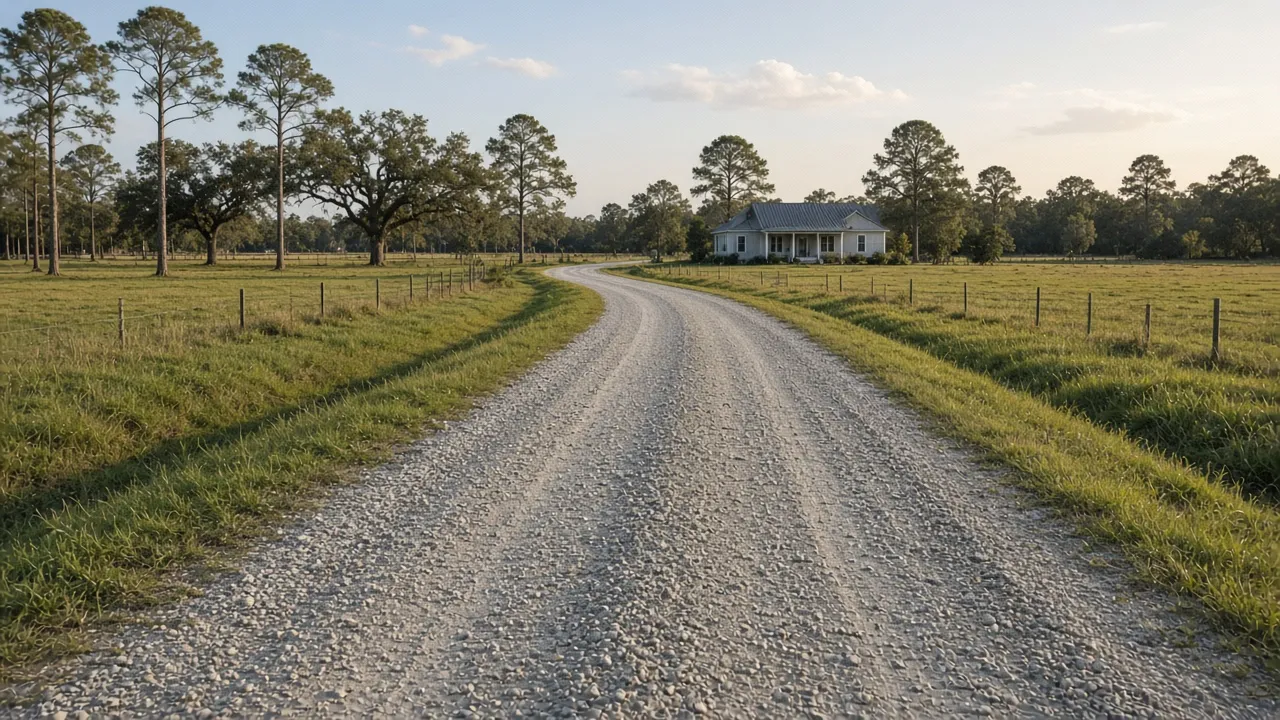
- long rural or agricultural driveways where paving the full length would be expensive;
- properties that want a natural, country look;
- lots where a permeable surface helps with water, as long as it’s still graded.
It’s a weaker fit when:
- your HOA or deed restrictions require a paved surface (check before you plan);
- the driveway is steep, so stone tends to wash downhill;
- you want a smooth surface for bikes, strollers, or wheelchairs.
How to keep a gravel driveway from washing out
- Keep the crown. Water should run to the sides, not down the middle.
- Keep swales and culverts clear. Leaves and sand fill them quickly in Florida.
- Fix ruts early. Rake low spots before they start holding water.
- Top up where it thins. Usually where cars turn, brake, and park.
- Watch for repeat washouts. If the same spot washes out every rainy season, the grade or drainage needs fixing. Adding more stone won’t solve it.
If you also have an asphalt drive or parking pad, see our guide to driveway sealcoating in Lakeland and Orlando.
Questions to ask before you hire
- What base material and depth will you install, and will it be compacted in layers?
- Which top stone do you recommend for how I use the driveway, and why?
- How will water leave the driveway? Where do the crown, swales, or culvert go?
- Is a paved apron or a permit needed at the road, and who handles it?
- What edging will keep the stone in place?
- What maintenance should I expect in the first year?
For a full checklist, see how to prepare for a paving estimate.
Frequently asked questions
Is gravel cheaper than asphalt for a driveway? Usually upfront, yes. But gravel needs ongoing stone and regrading, so compare long-term upkeep as well as the initial price.
What is the best gravel for a Florida driveway? It depends on traffic, drainage, and looks. Crushed concrete, limerock, granite, and asphalt millings are common choices, and a compacted base matters more than the top stone.
Why does my gravel driveway keep washing out? Usually the shape is wrong: no crown, blocked swales, or a low spot. Fix the grade and drainage first, then add stone.
Can I put down a gravel driveway myself? Small repairs and top-ups, yes. New driveways on soft or wet ground need excavation, base material, and compaction equipment.
How should I compare gravel driveway quotes? Ask each contractor for a per-square-foot price with base depth, stone type, drainage work, and edging spelled out, so you’re comparing the same scope.
Does A1 Paving install gravel driveways in Polk County? Yes. A1 Paving installs stone and gravel driveways from Polk City across Polk County, including Lakeland. See the Stone & Gravel service page.
Does A1 Paving offer free estimates? Yes. You can request a free estimate on A1 Paving’s contact page or by calling (407) 966-5164.
Conclusion
A gravel driveway can be a smart, budget-friendly choice for Polk County properties, especially long rural drives, as long as it’s built on a compacted base with real drainage. Most of the price comes from prep, stone, and water management, so compare written scopes, not just totals. If you’re deciding between gravel and asphalt, an on-site estimate will show which one fits your property and budget.
Planning a gravel driveway? Call A1 Paving at (407) 966-5164 or request a free estimate.
Next step
Plan your project
Share the property location, intended use, and current surface condition, and A1 Paving Asphalt will review the site and provide a written estimate.