Short answer: Driveway sealcoating is a thin protective coat over asphalt that slows damage from sun, water, and fuel or oil drips. Many Central Florida contractors recommend resealing a home driveway every two to three years, but the right timing depends on the driveway’s condition, traffic, and shade. Let new asphalt cure first, and repair cracks before sealing.
The guidance below applies across Central Florida, from Lakeland and the rest of Polk County to the greater Orlando area, where A1 Paving also works.
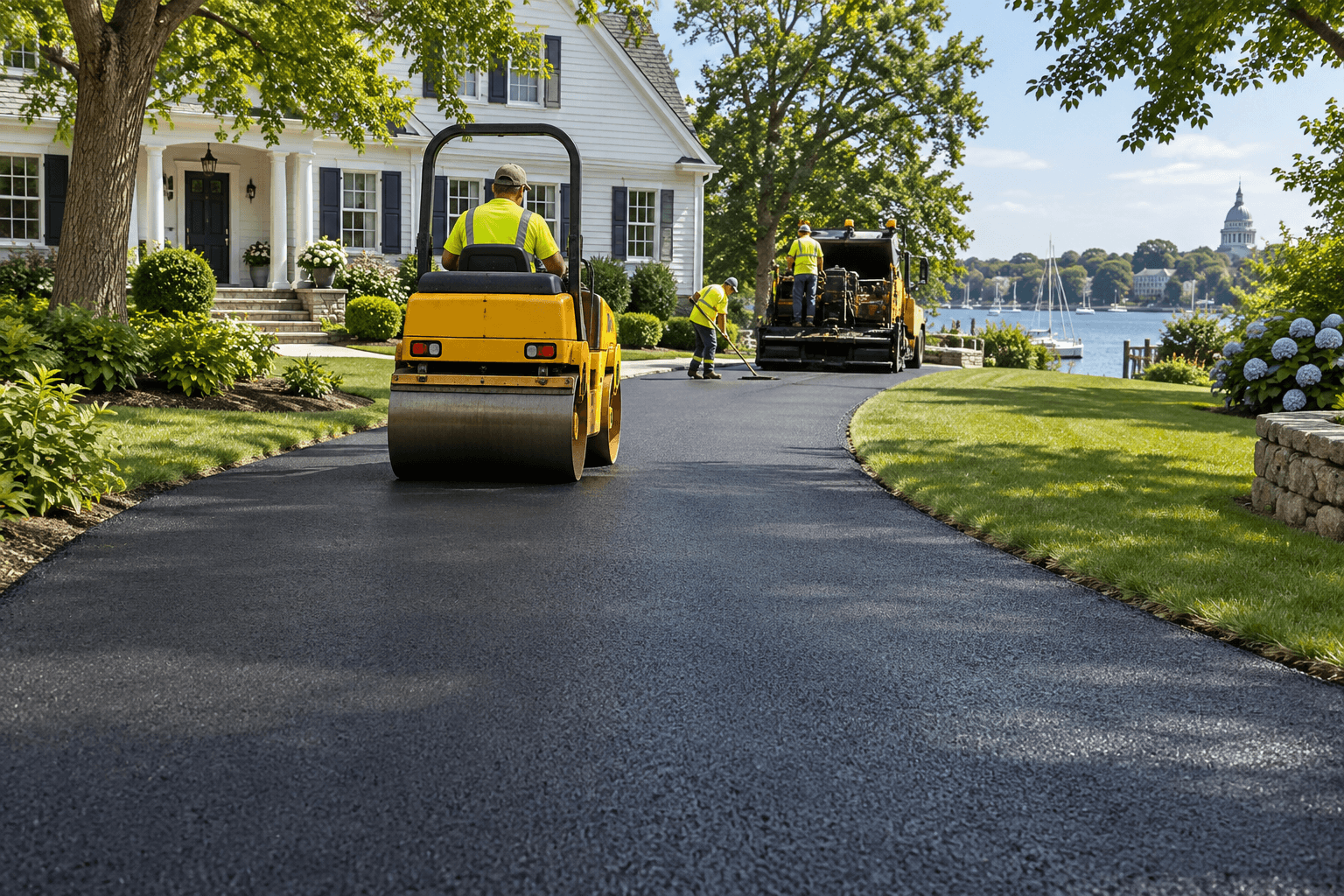
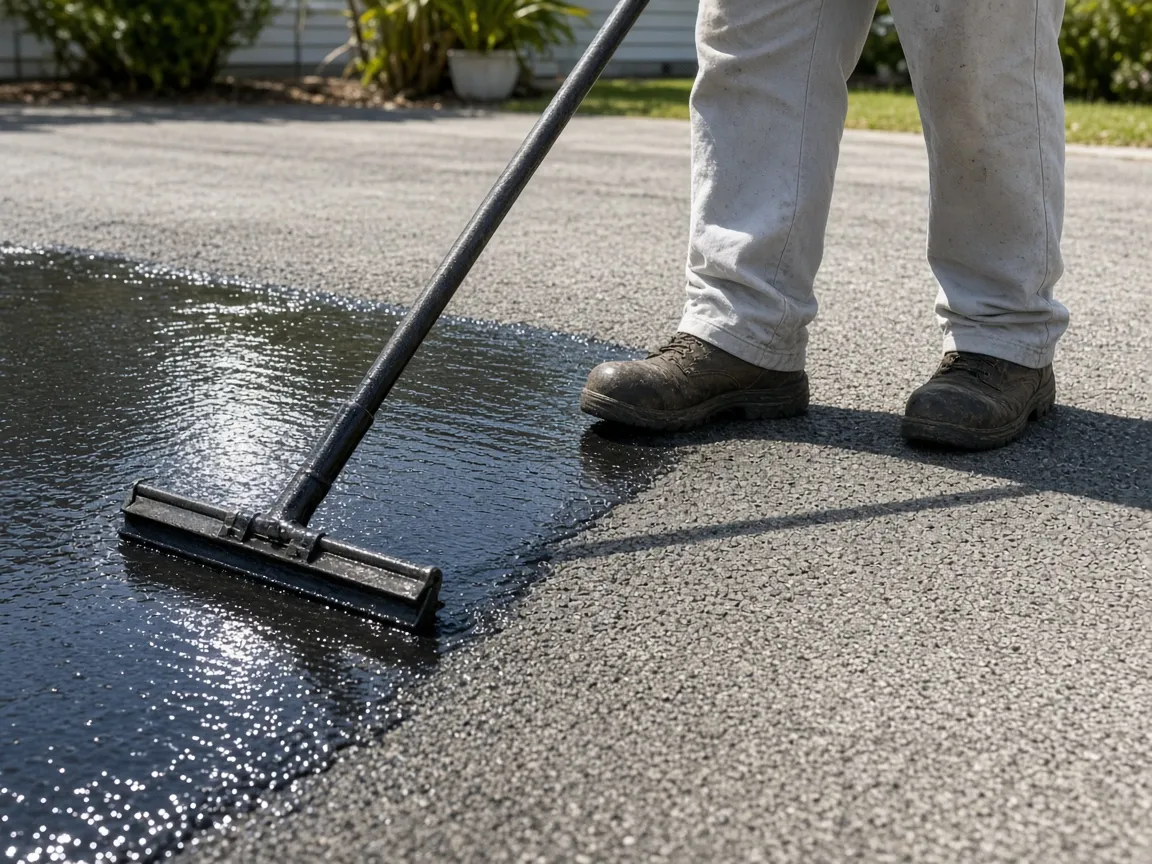 Illustration: sealcoat goes on after cleaning and crack repair.
What does sealcoating actually do?
Asphalt is crushed stone held together by a dark, sticky binder. Over time, sunlight and air dry that binder out. The surface fades from black to gray, small stones loosen, and water starts to work its way in. Sealcoat is a liquid coating, often with fine sand mixed in for traction, spread in a thin layer over the surface. Once it cures, it:
- shields the binder from ultraviolet light, which is strong year-round in Florida;
- helps shed rain instead of letting it soak into tiny surface pores;
- resists gasoline and oil drips, which soften asphalt where cars park;
- gives the driveway an even, dark color again.
Think of sealcoat like paint on a wooden deck: it protects a sound surface, but it doesn’t rebuild one. It won’t fix a sinking area, a web of “alligator” cracks, or a base that holds water. Those problems need patching, resurfacing, or deeper repair first. Our guide to asphalt repair options explains the differences.
Why Florida weather matters for your driveway
Central Florida pavement deals with a particular mix of conditions. The sun is intense most of the year. Summer brings frequent afternoon thunderstorms, and short, heavy downpours can put a lot of water on a driveway in a hurry. Heat softens asphalt, and parked cars that drip oil leave soft spots. Shade from oaks or other trees can keep parts of a driveway damp and covered in leaves, while the sunny side fades faster.
None of this means Florida asphalt is doomed. It does mean that small problems, like an unsealed crack or a low spot that holds water, can grow faster than homeowners expect. A good maintenance habit is to walk your driveway a couple of times a year, ideally once after a heavy rain, and note where water sits, where cracks are forming, and where the surface looks gray or rough.
How often should you sealcoat a driveway in Central Florida?
Most Florida contractors recommend resealing a residential driveway every two to three years, and busy commercial lots more often (see the maintenance notes in ClearCost’s Lakeland–Winter Haven guide). Treat that as a starting point and let the pavement tell you:
| What you see | What it usually suggests |
|---|---|
| Surface has turned gray, and small stones show | The binder is wearing; a good time to reseal |
| Hairline cracks | Fill the cracks, then seal |
| Water darkens the surface and soaks in quickly | The surface is porous; plan to seal soon |
| Wide cracks, potholes, soft or sunken areas | Repair first; sealing alone won’t help |
| Still dark and tight, sealed within about two years | It can probably wait |
More isn’t always better. Sealing too often can build up layers that crack and flake, especially in areas with little traffic.
How long after paving should you wait to seal?
New asphalt needs time to cure before it is sealed, and the right wait depends on the mix and the weather. Sealing too soon can trap oils that still need to evaporate. Many contractors suggest waiting several months before the first sealcoat; follow your installer’s written timeline. More detail: how often to sealcoat asphalt in Florida.
What prep comes before sealcoating?
A sealcoat lasts only as long as it stays bonded to the asphalt. Most early failures, like peeling, flaking, or blotchy color, trace back to rushed preparation. A careful job usually includes:
- Cleaning. Sweeping or blowing off dirt, sand, and leaves, and edging back grass that has crept onto the pavement.
- Oil-spot treatment. Applying a primer to oil and fuel stains so the coating can grip there too.
- Crack filling. Sealing cracks so water can’t travel underneath the new coat.
- Patching. Cutting out and rebuilding failed areas that sealcoat can’t fix.
- Protecting edges. Keeping coating off concrete walks, pavers, garage floors, and landscaping.
When you compare quotes, ask which of these steps each one includes. Two quotes for “sealcoating” can describe very different amounts of work.
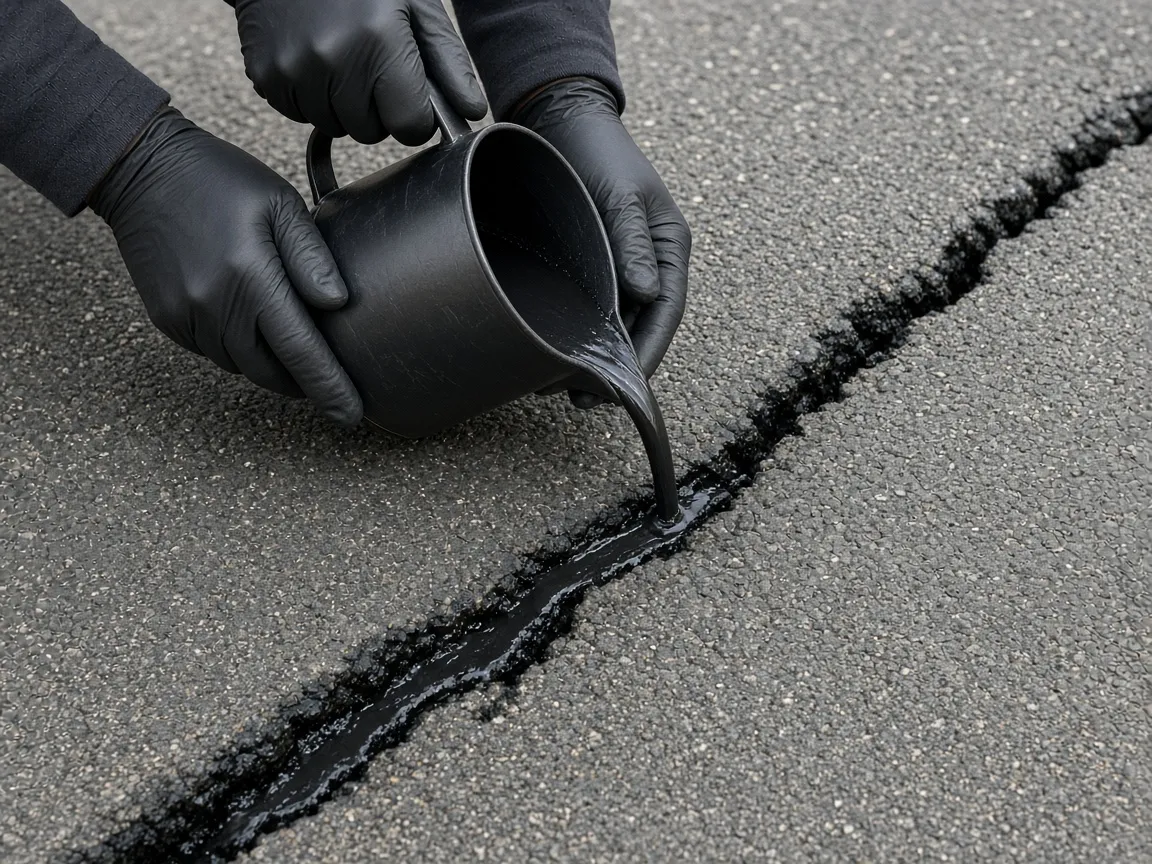 Illustration: cracks are filled first so water can’t get under the new coat.
When is the best time to sealcoat in Florida?
Sealcoat needs dry weather and enough warmth to cure. In Lakeland, Orlando, and the rest of Central Florida, summer afternoon storms are routine, so contractors usually aim for a morning start on a dry day with no rain expected for the following hours. Cooler, drier months are often easier to schedule. If rain hits fresh sealcoat too soon, it can wash out or leave streaks, and a good contractor will reschedule rather than gamble on the forecast.
After the job, keep cars off the surface until your contractor says it’s ready, and keep sprinklers pointed away. Cure time depends on the product, temperature, humidity, and shade. Foot traffic is often fine sooner than cars, but the product label and your contractor’s instructions come first.
What affects driveway sealcoating cost?
Every driveway is different, so a reliable price comes from an on-site look. These are the factors that change the number:
- Size. Measured in square feet, including turnarounds and parking pads.
- Condition. How much crack filling and patching the driveway needs first.
- Prep work. Cleaning effort and the number of oil stains to treat.
- Product and number of coats. One or two coats, and the type of sealer.
- Access and edges. Tight corners, pavers, and landscaping that need protecting.
Independent cost guides publish per-square-foot ranges for the Lakeland area (for example, HomeBlue’s Lakeland sealing estimate). Treat those as typical market ranges, not A1 Paving prices. Real quotes vary, mostly because of prep and repairs. If you’re comparing estimates, ask each contractor for the square footage they measured and the steps included, so you’re comparing the same scope. For a real number, call A1 Paving for an on-site quote.
DIY sealer or a professional crew?
Store-bought sealer can work on a small, sound driveway if you clean thoroughly, treat oil spots, fill cracks, and pick a dry stretch of weather. The trade-offs are time, equipment, and consistency: a thin, uneven coat wears quickly, and sealer on a garage floor or paver walk is hard to undo. A professional crew brings commercial cleaning equipment and crack-filling material. Just as important, a crew can tell you honestly when sealing isn’t the right fix yet. If your driveway has wide cracks, potholes, or soft spots, have it looked at before you buy sealer.
A simple driveway maintenance routine
- A few times a year: sweep or blow off sand and leaves, especially along the edges.
- After heavy rain: note any puddles that last more than a few hours.
- When you see them: clean fresh oil drips before they soak in.
- Each year: check for new cracks and fill them while they’re small.
- Every few years: reseal when the surface shows the signs in the table above.
Frequently asked questions
How often should I sealcoat my asphalt driveway in Florida? Many Central Florida contractors recommend every 2–3 years for residential driveways. Reseal when the surface turns gray, absorbs water, or shows hairline cracks, and not while the previous coat is still in good shape.
Can sealcoating fix cracks or potholes? No. Sealcoat protects the surface. Cracks need to be filled and potholes patched before sealing, or the damage keeps growing underneath.
How soon can I drive on a sealcoated driveway? It depends on the product, heat, and humidity. Cars usually need to stay off longer than foot traffic, so follow the product label and your contractor’s written instructions.
Can you sealcoat new asphalt right away? No. New asphalt needs time to cure first. Your installer should tell you when it’s ready.
What happens if it rains after sealcoating? Rain on fresh sealcoat can wash it out or leave streaks. That’s why contractors schedule dry days and reschedule when storms are likely.
Does A1 Paving sealcoat driveways in Lakeland and Orlando? Yes. A1 Paving offers sealcoating and asphalt repair from its Polk City base, serving Polk County, including Lakeland, and the greater Orlando area.
Does A1 Paving offer free estimates? Yes. You can request a free estimate on A1 Paving’s contact page or by calling (407) 966-5164.
Conclusion
Sealcoating is affordable maintenance that protects asphalt from Florida’s sun, rain, and oil drips, but only on pavement that’s structurally sound. For most home driveways, plan to reseal every two to three years, fill cracks first, and pick a dry stretch of weather. If you can’t tell whether your driveway needs sealing, repair, or something more, an on-site look will answer that quickly.
Ready to protect your driveway? Call A1 Paving at (407) 966-5164 or request a free estimate.
Next step
Plan your project
Share the property location, intended use, and current surface condition, and A1 Paving Asphalt will review the site and provide a written estimate.