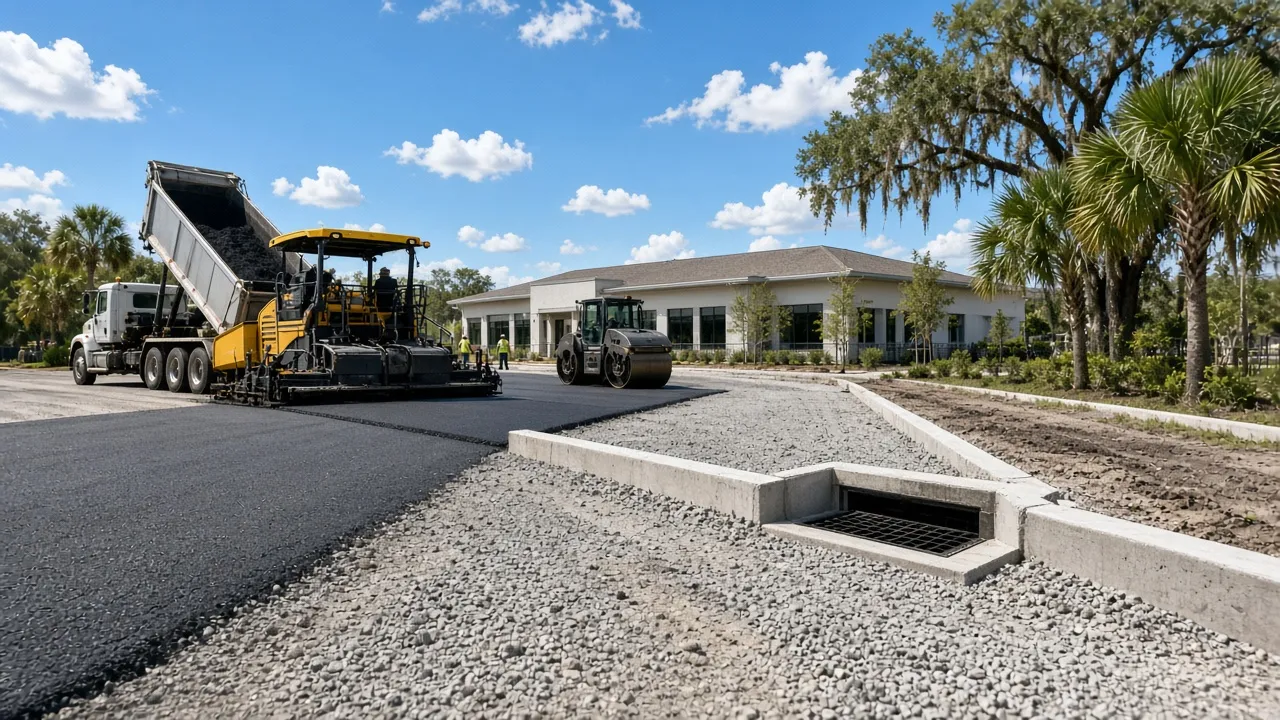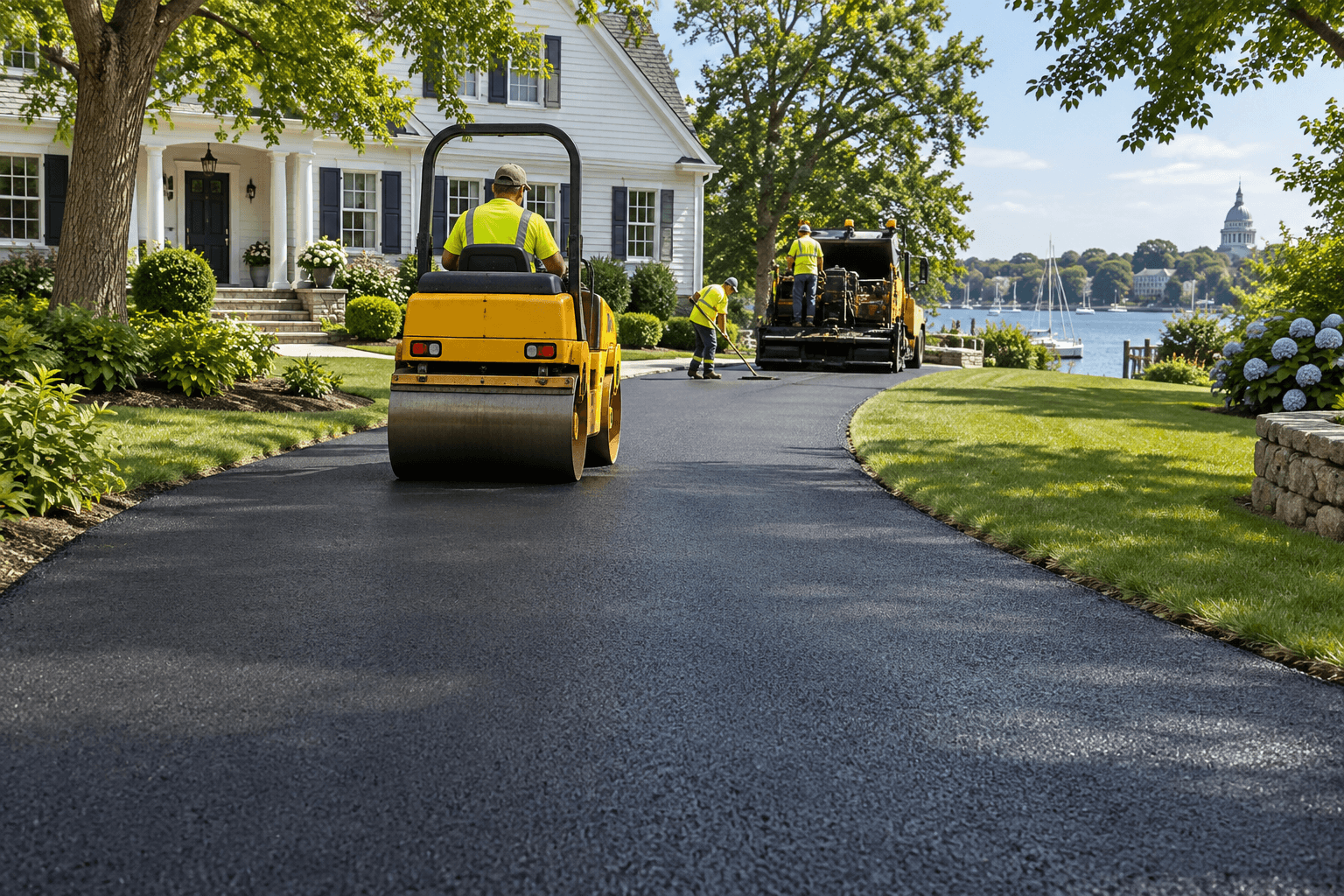
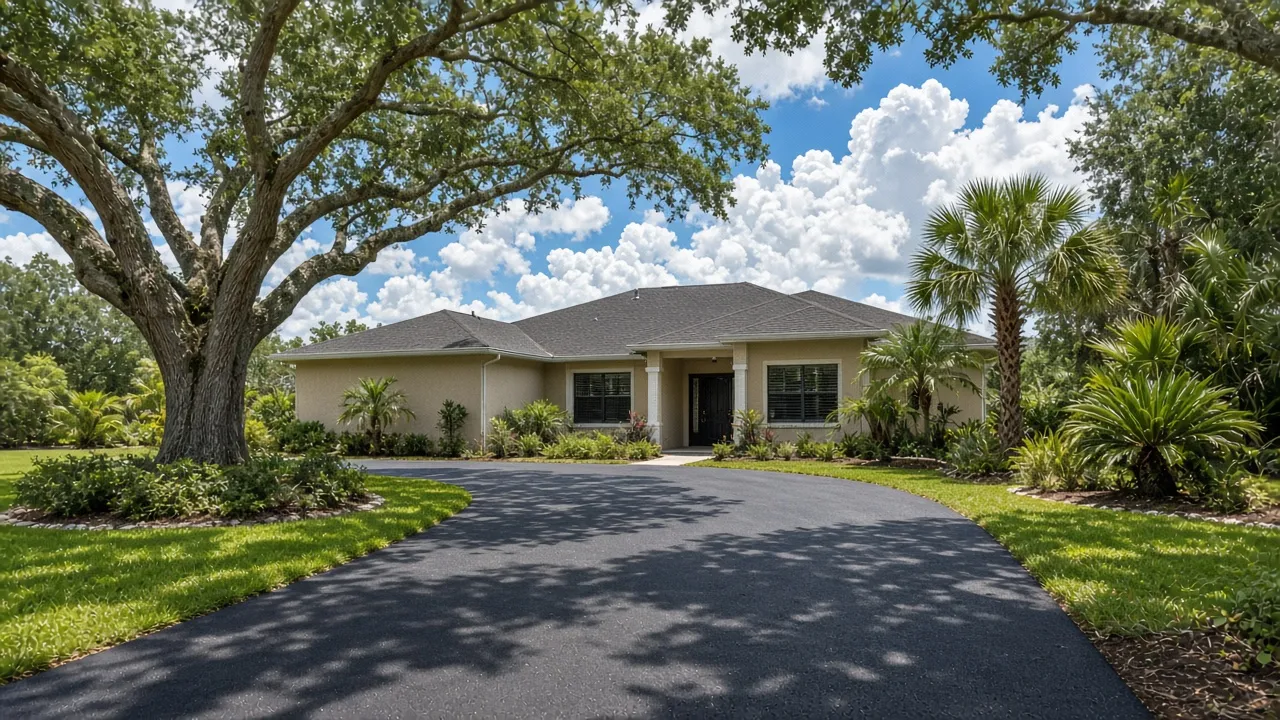
Illustration: a new asphalt driveway at a Central Florida home. Not an A1 Paving project.
Short answer: A well-built, well-maintained asphalt driveway can give trouble-free service for up to about 20 years, according to industry groups such as the Asphalt Institute. In Lakeland and the rest of Polk County, how close you get to that depends mostly on four things: the base under the asphalt, drainage, Florida’s sun and rain, and whether the surface is sealed and crack-filled on time.
By Bill Cooper, A1 Paving, based in Polk City, FL.
If you’re planning a new driveway or wondering how much life is left in the one you have, this guide walks through what actually shortens or stretches the lifespan of asphalt in Central Florida, when to start sealcoating, and how to tell whether your driveway needs a repair or a replacement. For the installation itself, see A1 Paving’s asphalt paving service.
How long does an asphalt driveway last in Lakeland, FL?
There’s no single number, because the lifespan of an asphalt driveway is decided long before the first car parks on it. Industry guidance from the Asphalt Institute and the Wisconsin Asphalt Pavement Association puts a properly designed, built and maintained driveway at up to about 20 years of service. Pavement industry groups also note that poorly built or neglected asphalt can last as little as half as long as well-maintained pavement.
In practice, three things decide where your driveway lands in that range:
- How it was built: a firm, well-drained base and the right thickness of asphalt for the vehicles that use it.
- The local climate: in Polk County that means strong sun, summer heat and heavy rain, not freezing winters.
- How it’s cared for: sealcoating, crack filling and fixing drainage problems before they reach the base.
How does Florida’s heat, sun and rain affect asphalt?
Central Florida doesn’t have the freeze-thaw cycles that crack driveways up north. Our wear comes from somewhere else.
Sun and UV
Asphalt is held together by a flexible, oil-based binder. Strong, year-round sun slowly dries out (oxidizes) that binder at the surface. That’s why a black driveway gradually fades to gray, turns brittle, and starts to shed small stones. A brittle surface cracks more easily, and every crack is a path for water.
Heat
On hot afternoons, asphalt softens slightly. That flexibility is normal and is part of why asphalt handles small ground movement well. It also means a new driveway can scuff when tires are turned while the car is standing still, and sharp point loads such as a trailer jack, a motorcycle kickstand or a ladder foot can leave marks, especially in the first months.
Rain and drainage
Heavy summer storms are the biggest threat. Water that gets through cracks or pools along the edges softens the base underneath. Once the base is weak, traffic pushes the surface down, and cracks spread into the pattern known as alligator cracking, then potholes. Good grading, so water runs off the driveway and away from the house, does more for lifespan than almost anything else.
Tree roots and edges
Large trees near the driveway, including the live oaks common around Lakeland, can lift or crack asphalt as roots grow. Unsupported edges also crumble over time when tires run off the side.
Why does base preparation matter so much?
The asphalt you see is only the top layer. Under it is a compacted base, usually crushed stone, sitting on prepared soil (the subgrade). Industry guidance is consistent that the subgrade must be firm, even, and free of organic material and topsoil before anything else goes down.
A good installation usually includes:
- Removing soft or organic soil and old pavement where needed.
- Grading for drainage, so rain sheds off the surface instead of soaking in.
- A properly compacted stone base of the right depth for the site and the vehicles.
- Asphalt at the right thickness, compacted while hot so it’s dense and smooth.
- Finished edges that are supported and shaped to shed water.
Skipping any of these steps can make a driveway look perfect on day one and fail years early. When you compare estimates, ask each contractor to explain how they will prepare the base and handle drainage on your property. Still choosing a material? Our guide to asphalt vs. concrete driveways in Polk City and Lakeland compares the tradeoffs.
When should you sealcoat a new asphalt driveway?
New asphalt needs time to cure before the first sealcoat. The Asphalt Institute’s guidance is not to seal a driveway until it’s at least several months old, and then to reseal periodically, about every two to five years depending on wear. Many Central Florida contractors recommend the shorter end of that range, every two to three years, for home driveways in full sun.
Sealcoating doesn’t add strength, but it slows sun damage and helps keep water out. Fill cracks first, then seal, and pick a dry stretch of weather. Our guide to driveway sealcoating in Lakeland and Orlando explains the timing and prep in more detail, and A1 Paving’s sealing and patching service covers crack filling, sealcoating and repairs.
What can you do to make an asphalt driveway last longer?
- Keep water moving. Clear debris from edges and swales, and watch for puddles that last more than a few hours after rain.
- Fill cracks early, before summer storms push water into the base.
- Reseal on schedule once the surface turns gray or starts absorbing water.
- Protect the edges. Avoid driving off the sides, and keep soil or sod built up along the edge.
- Go easy on new asphalt. Avoid turning the steering wheel while parked, and put a board under jacks, kickstands and trailer tongues on hot days.
- Clean up fuel and oil drips, which soften asphalt.
- Plan for trees. Ask about root barriers or a different layout if large trees are close to the driveway.
How do you know if your driveway needs repair or replacement?
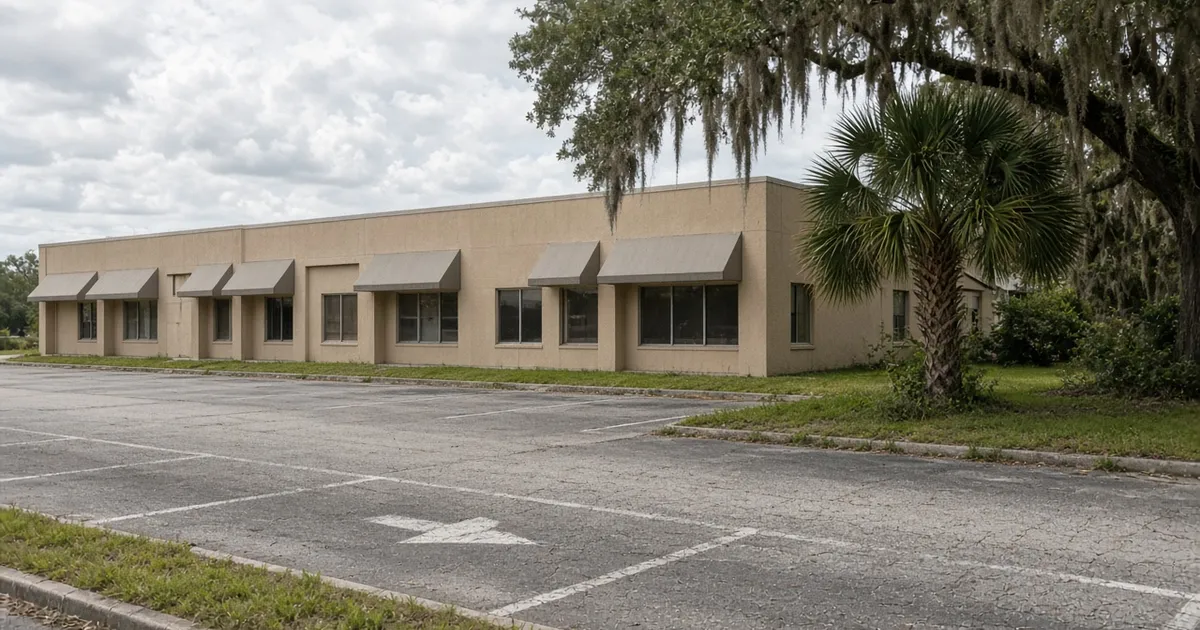
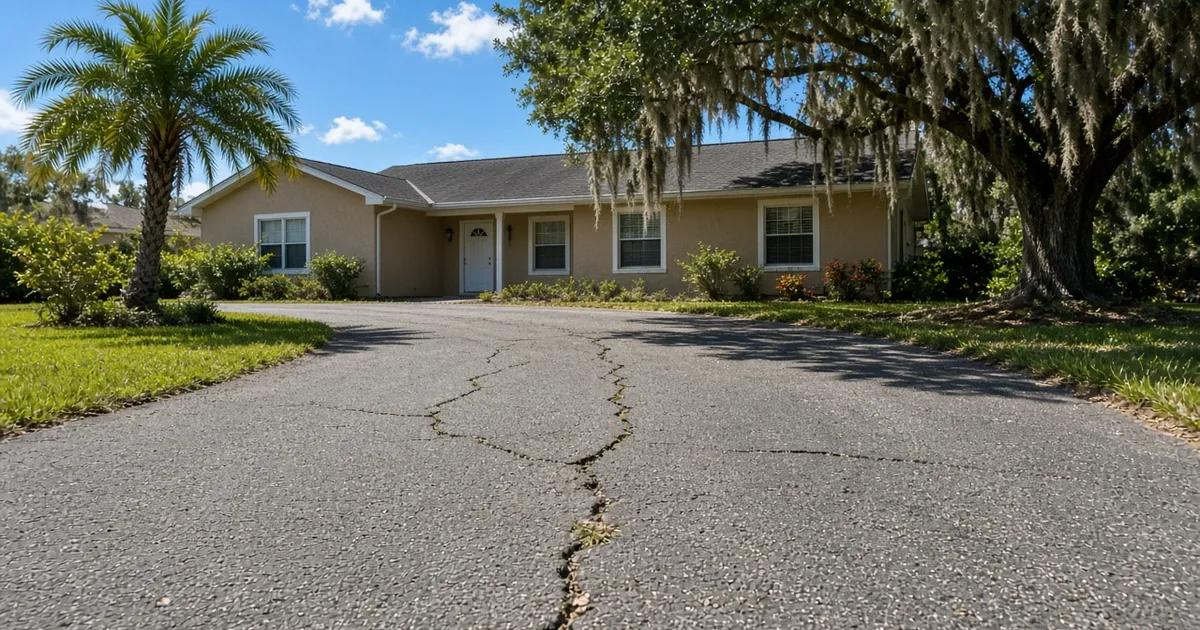
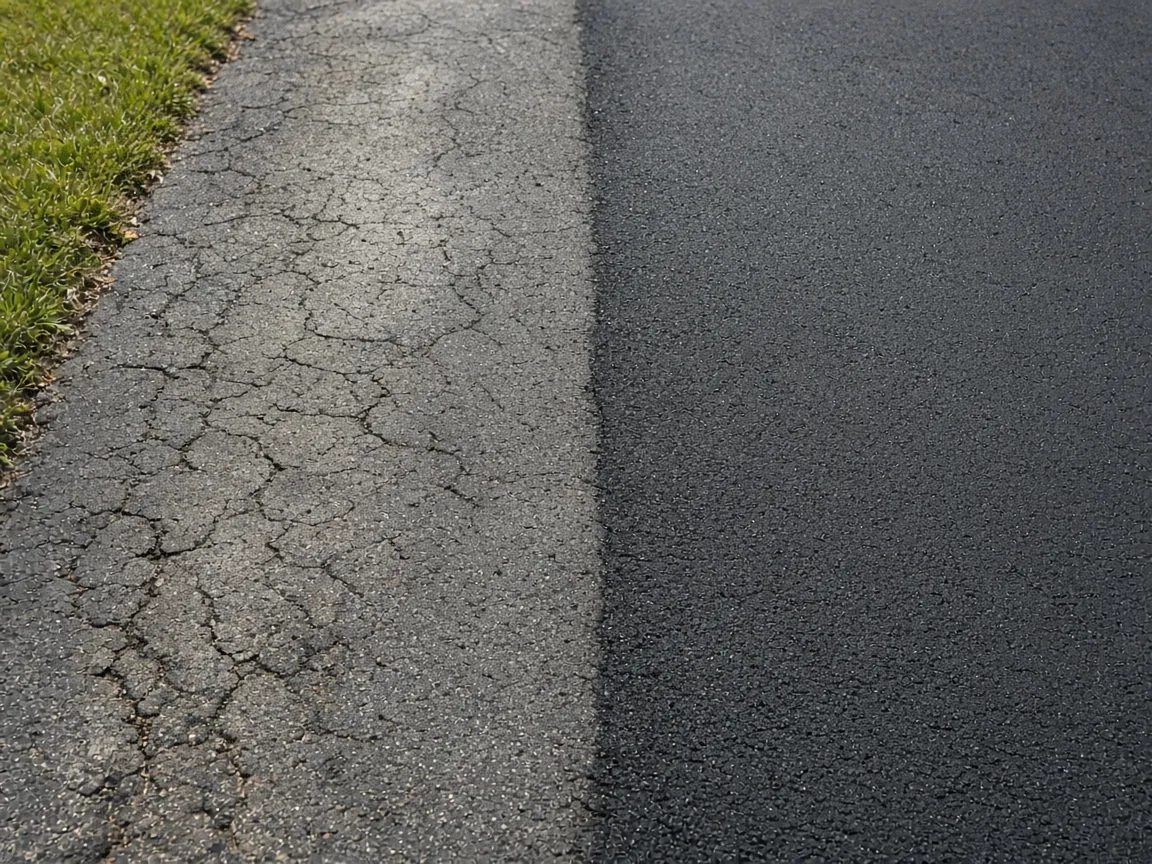 Illustration: faded, cracked asphalt (left) next to asphalt in good condition (right). Not an A1 Paving project.
Signs a repair or maintenance is enough
- The surface is faded gray but still solid underfoot.
- There are hairline or single cracks with no sinking around them.
- There are one or two potholes or soft spots in an otherwise sound driveway.
- Edges are crumbling in a few places.
These problems can usually be handled with crack filling, patching and sealcoating. Our pothole repair cost guide explains the difference between a quick patch and a lasting repair. To tell which cracks can simply be filled and which point to base failure, see our guide to asphalt crack repair in Lakeland and Orlando.
Signs it may be time to resurface or replace
- Alligator cracking covers large areas, which usually means the base is failing.
- Potholes keep coming back in the same places after being patched.
- Large areas sink, rut or hold water after every rain.
- Patches cover much of the driveway, so there’s little original pavement left.
- The driveway is near the end of its expected service life and shows several of the signs above.
If the base is still sound, resurfacing with a new layer of asphalt (an overlay) may be an option. If the base has failed, the lasting fix is to remove the old pavement, rebuild the base and pave again. An on-site look is the only reliable way to tell which one your driveway needs.
Areas A1 Paving serves
A1 Paving is based in Polk City and installs, repairs and seals asphalt driveways in Lakeland, Polk City and nearby Polk County communities such as Auburndale, Winter Haven, Lake Alfred, Haines City, Davenport and Bartow, as well as Orlando. Free estimates are available.
Conclusion
A new asphalt driveway in Lakeland or anywhere in Polk County can last many years, up to about 20 by industry estimates, but only if it starts with a solid, well-drained base and gets regular care. Florida’s sun dries out the surface and heavy rain attacks the base, so crack filling, sealcoating once the asphalt has cured, and good drainage make the biggest difference. Small cracks and isolated potholes can usually be repaired. Widespread alligator cracking, recurring potholes and sinking usually mean it’s time to resurface or replace. If you want a clear answer for your driveway, request a free estimate or call A1 Paving at (407) 966-5164.
Frequently asked questions
How long does an asphalt driveway last in Florida? Industry groups estimate that a properly built and maintained asphalt driveway can last up to about 20 years. In Florida, sun damage and drainage are the main factors, so base preparation, crack filling and regular sealcoating decide how long yours lasts.
How soon can I sealcoat a new asphalt driveway? Wait until the asphalt has cured. Industry guidance is at least several months after paving. Ask your installer for the timing that fits your driveway and the product being used.
How often should I sealcoat my driveway in Lakeland? Industry guidance is about every two to five years. Many Central Florida contractors suggest every two to three years for home driveways in full sun. Reseal when the surface turns gray or starts absorbing water, not while the last coat is still in good shape.
What shortens the life of an asphalt driveway? A weak or poorly drained base, standing water, cracks left open through the rainy season, skipped sealcoating, fuel and oil drips, heavy vehicles on thin pavement, tree roots, and unsupported edges.
Can you pave over an old asphalt driveway? Sometimes. An overlay can work when the base underneath is still solid and the damage is mostly on the surface. If the base has failed, the old asphalt and bad base need to come out first.
When can I drive on a new asphalt driveway? Follow the instructions your installer gives you. Timing depends on the asphalt mix, temperature and site conditions, and new asphalt stays softer for a while, so avoid sharp turns while parked and heavy point loads at first.
Does A1 Paving install asphalt driveways in Lakeland? Yes. A1 Paving, based in Polk City, installs, repairs and seals asphalt driveways in Lakeland, Polk City, across Polk County and in Orlando, and offers free estimates.
Next step
Plan your project
Share the property location, intended use, and current surface condition, and A1 Paving will review the site and provide a written estimate.