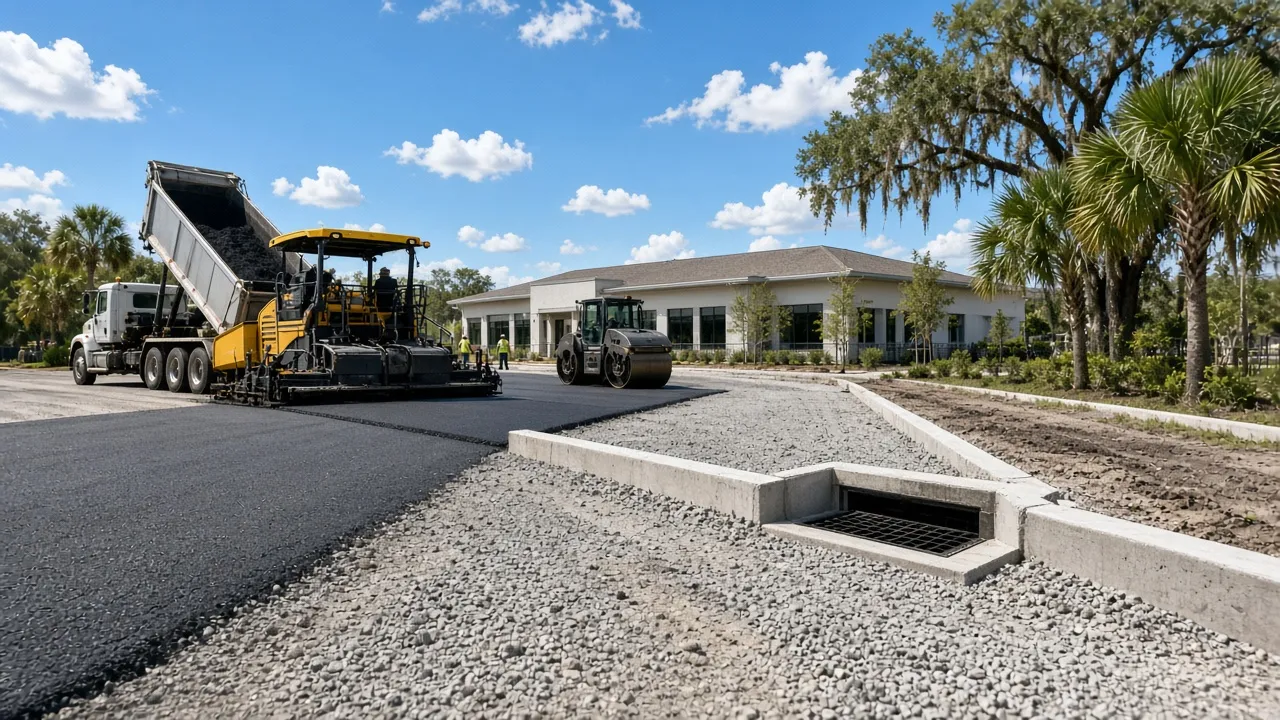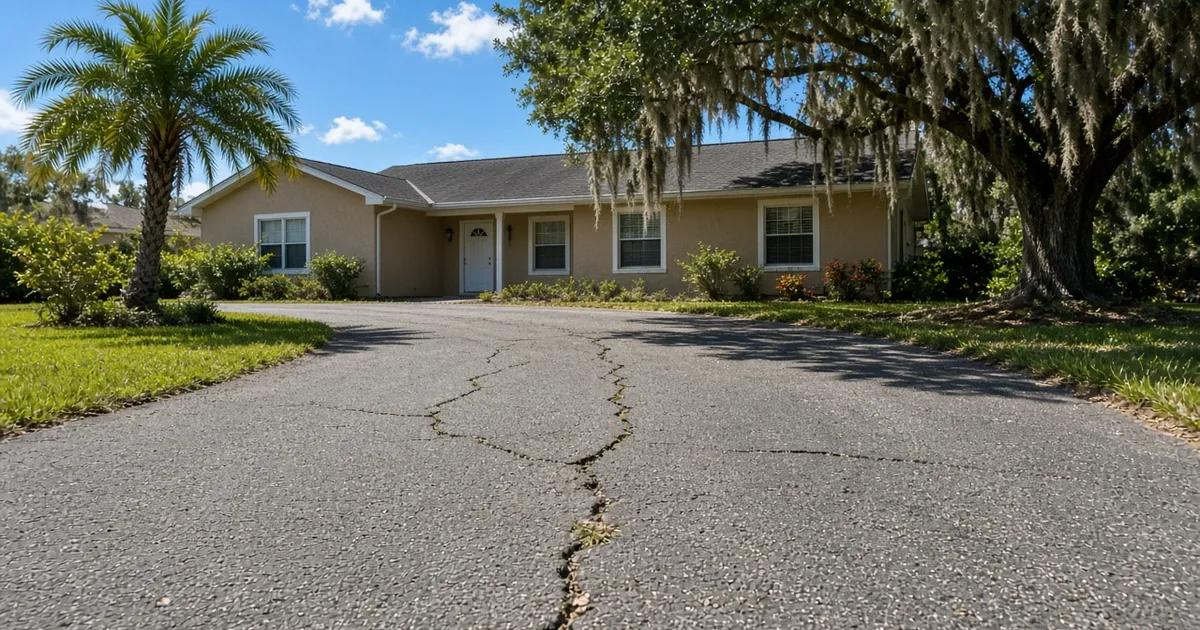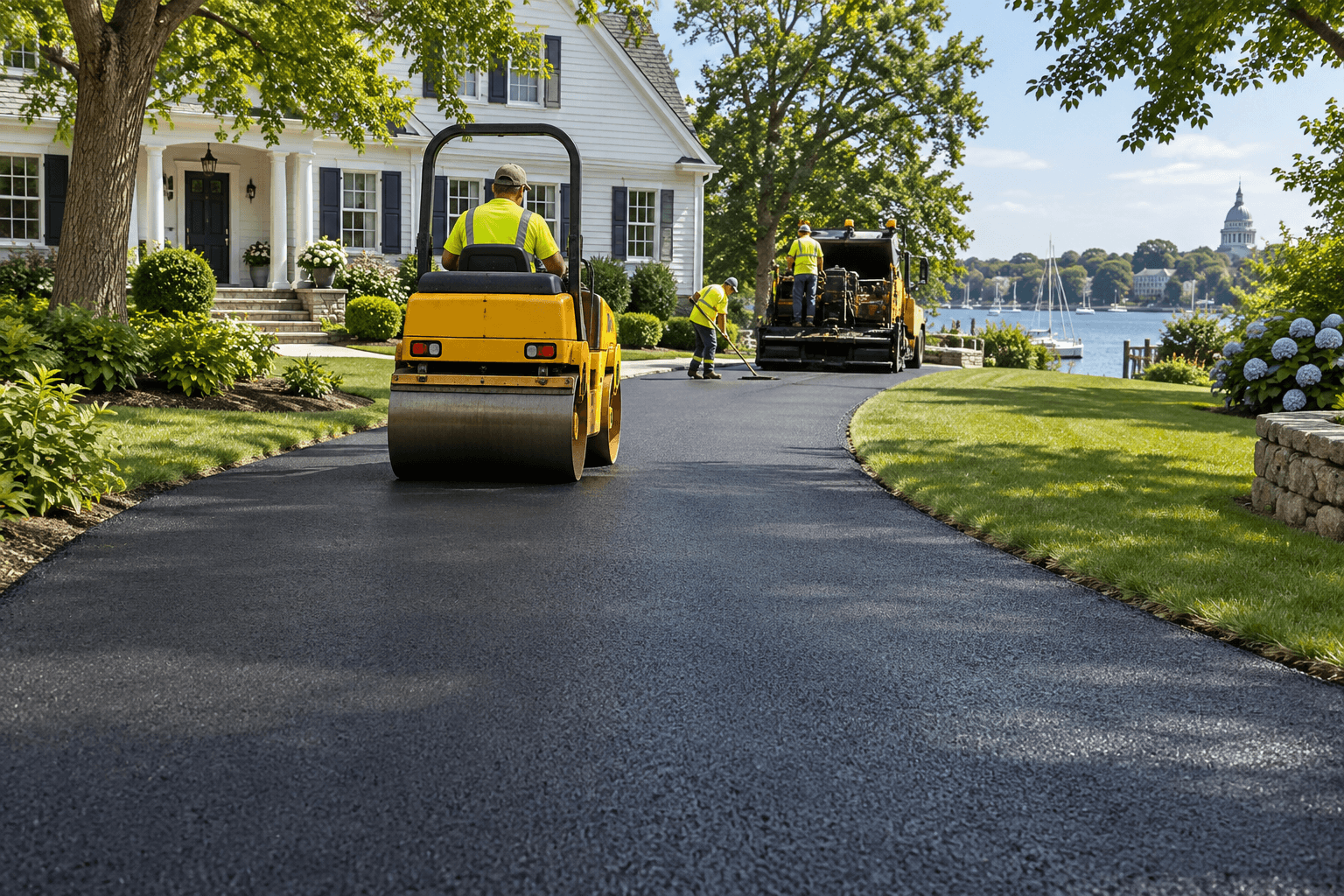
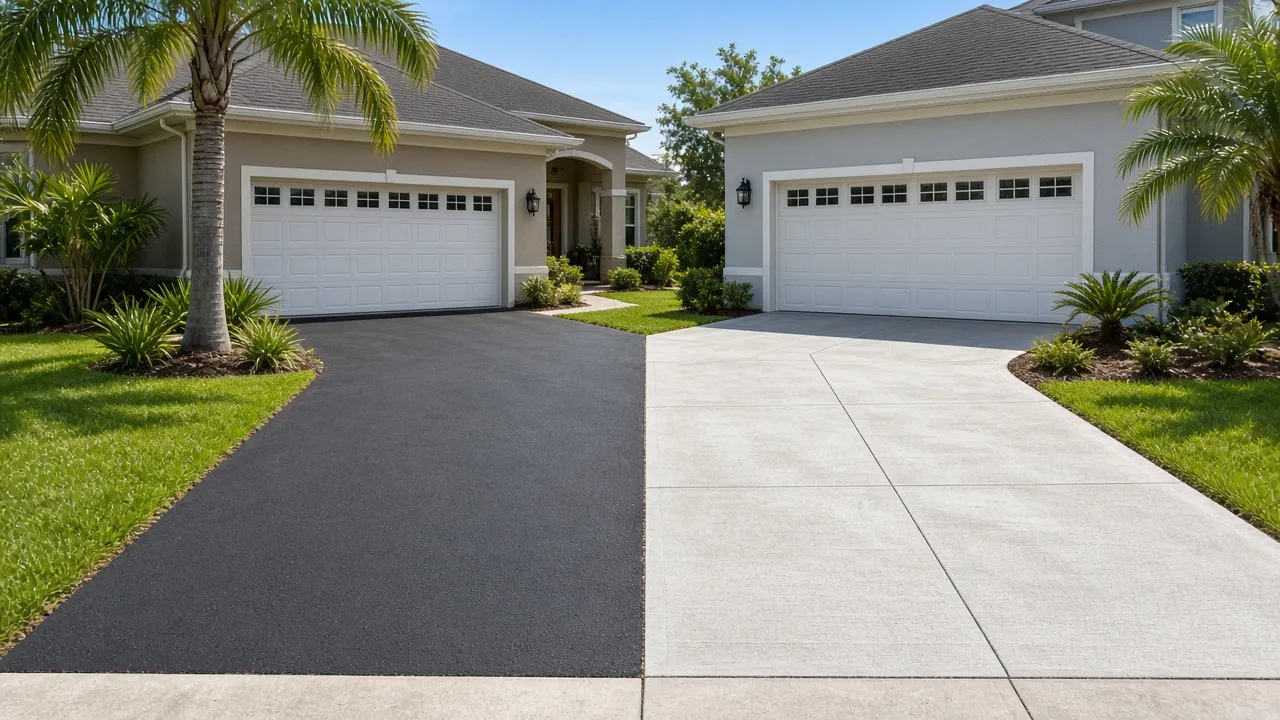
Illustration: an asphalt driveway next to a concrete driveway at Florida homes. Not an A1 Paving project.
Short answer: Neither material is best for every home. Asphalt is flexible, quick to install and use, and easy to patch or resurface, but it needs periodic sealcoating and gets hot in Florida sun. Concrete is rigid, lighter in color and can last longer with less routine care, but it cracks along joints, takes longer to cure, and is harder to repair invisibly. For homes in Polk City and Lakeland, the right choice depends on how you use the driveway, your drainage, your HOA rules and how much upkeep you want.
By Bill Cooper, A1 Paving, based in Polk City, FL.
This guide is an honest side-by-side comparison of an asphalt vs. concrete driveway in Florida, written for homeowners in Polk City, Lakeland and the rest of Polk County. It doesn’t include prices, because the cost of either material depends on the site. A1 Paving installs asphalt driveways (see our asphalt paving service), so we’ll also be clear about when concrete may suit you better.
What’s the difference between an asphalt and a concrete driveway?
Both start the same way: a prepared, compacted base on firm soil, graded so water drains away. The difference is the surface.
- Asphalt (blacktop) is stone held together by a flexible, oil-based binder. It’s placed hot, rolled smooth and can usually take traffic soon after it cools.
- Concrete is stone and sand bound by cement paste that hardens through a chemical reaction. It’s poured, finished, and then needs time to cure before it’s ready for vehicles.
That one difference, flexible versus rigid, explains most of the tradeoffs below.
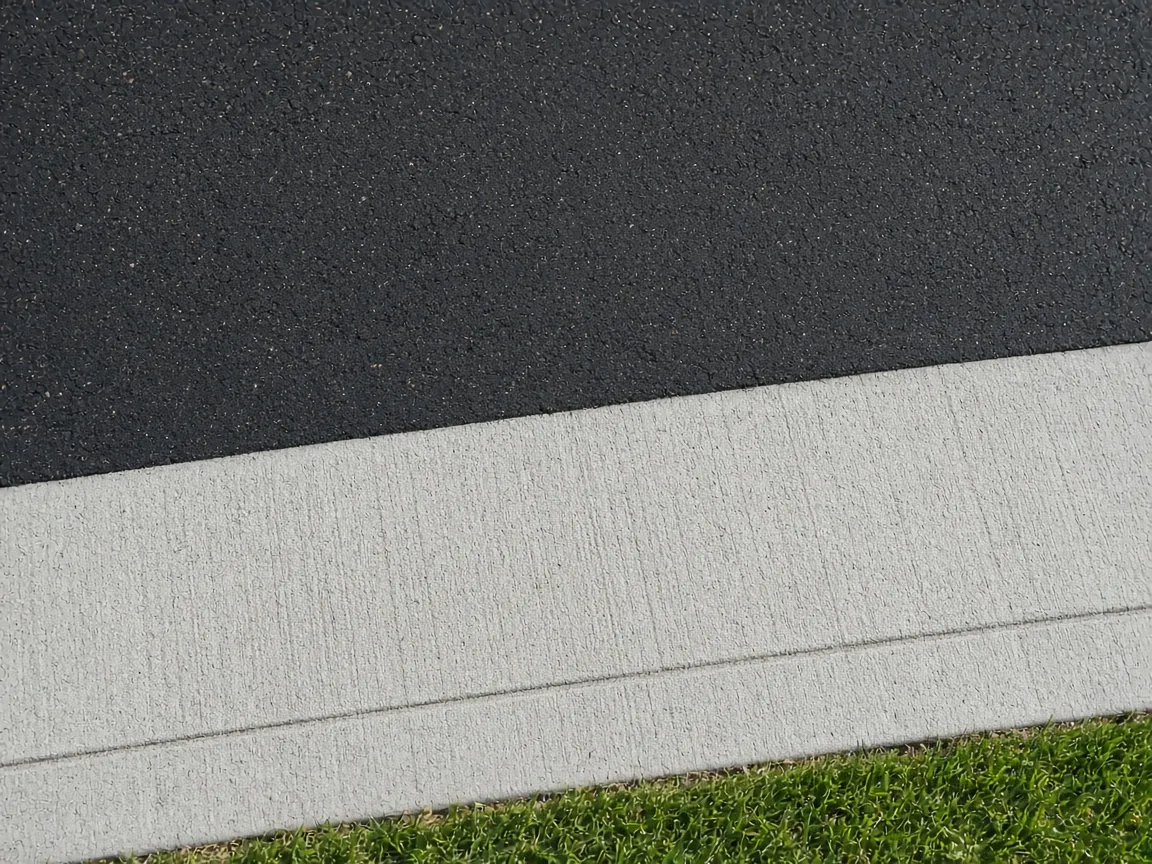 Illustration: asphalt (top) meeting broom-finished concrete with a control joint (bottom). Not an A1 Paving project.
Asphalt vs. concrete at a glance
| Factor | Asphalt | Concrete |
|---|---|---|
| Surface | Flexible, dark | Rigid, light gray |
| Florida heat | Gets hot; softens slightly on hot afternoons | Stays firmer and cooler to the touch |
| Cracking | Fine cracks as it ages; flexes with small ground movement | Shrinkage cracks are expected; control joints keep them in straight lines |
| Ready to use | Usually soon after it cools (follow installer’s instructions) | After curing, usually days, not hours |
| Routine care | Sealcoat every few years; fill cracks | Clean; seal if recommended; watch joints |
| Repairs | Patches and overlays are straightforward | Repairs often mean replacing whole sections |
| Lifespan (industry estimates) | Up to about 20 years when well built and maintained | 30 years or more when properly placed, cured and sealed |
| Look | Uniform black, fades to gray without sealing | Plain gray; decorative finishes available |
How do asphalt and concrete handle Florida heat and sun?
Central Florida’s strong, year-round sun is the biggest difference-maker here.
Asphalt: the dark surface absorbs heat, so it gets hot to the touch on summer afternoons and can soften slightly. That’s normal, but it means a car turning its wheels while parked, a trailer jack or a motorcycle kickstand can leave marks, especially on new asphalt. Over time, sun dries out the binder at the surface, which is why unsealed asphalt fades to gray and turns brittle. Regular sealcoating slows that process.
Concrete: a lighter surface reflects more sunlight, so it stays cooler and doesn’t soften in the heat. Sun fades concrete far less. Its weakness in heat is movement: concrete expands and contracts with temperature and moisture, which is one reason it cracks.
How do they handle rain, drainage and sandy soil?
Heavy summer storms are hard on any driveway, and drainage matters more than the surface material.
- Asphalt flexes a little with small ground movement. But once water gets through cracks and softens the base, asphalt can rut, crack in an alligator pattern, and develop potholes.
- Concrete spreads weight across the slab, but it doesn’t bend. If soil underneath settles or washes out, a slab can crack or sink, and lifting or replacing it is a bigger job.
For either material, ask the contractor how the base will be built and how water will leave the driveway. Our guide to how long a new asphalt driveway lasts in Lakeland explains why base preparation decides so much of a driveway’s life.
Which lasts longer, asphalt or concrete?
By industry estimates, concrete usually has the longer potential lifespan. The Asphalt Institute says a well-designed asphalt driveway can give trouble-free service for up to about 20 years. A concrete industry homeowner guide says properly placed, cured and sealed concrete can last 30 years or longer.
Those are best-case numbers for well-built, well-maintained driveways. A poorly built driveway of either material will fall short, and a well-maintained asphalt driveway can be resurfaced rather than fully replaced when the base is still sound.
Which needs more maintenance?
Asphalt needs more routine care. Plan on filling cracks as they appear and sealcoating every few years once the new asphalt has cured. Industry guidance is about every two to five years, and many Central Florida contractors suggest every two to three years for driveways in full sun. Our driveway sealcoating guide covers timing and prep, and A1 Paving’s sealing and patching service handles crack filling, sealcoating and repairs.
Concrete needs less routine care, mostly cleaning and, if your contractor recommends it, a penetrating sealer. Oil and rust stains show more on light concrete, and Florida humidity can leave mildew that needs pressure washing.
Which is easier to repair?
Asphalt is easier to repair. Cracks can be filled, potholes patched, and a worn surface can often be overlaid with fresh asphalt. Patches may look slightly different from the older surface until the whole driveway is sealed. See our pothole repair guide for how patching works.
Concrete is harder to repair invisibly. Concrete industry guidance is blunt: concrete will crack, which is why contractors cut control joints so cracks form in straight, planned lines. Random cracks can be sealed, but a badly cracked or sunken section usually has to be cut out and replaced, and new concrete rarely matches the old color exactly.
How fast can you use the driveway?
Asphalt can usually be driven on much sooner than concrete, since it hardens as it cools. New asphalt stays softer for a while, so follow your installer’s instructions. Concrete needs to cure, and industry guidance calls for keeping fresh concrete moist for about the first week. Your contractor will tell you when it’s ready for cars.
What about looks, HOA rules and resale?
- Looks: asphalt is uniform black and darkens to a crisp finish after sealing. Concrete is lighter and can be colored, stamped or textured.
- HOA and city rules: some Florida neighborhoods specify driveway materials or colors. Check your HOA covenants and any city or county permit rules for the driveway apron before you choose.
- Resale: a driveway in good condition helps curb appeal either way. Buyers notice cracks, stains and sinking more than the material.
So which should you choose?
Asphalt may be the better fit if:
- You want the driveway usable quickly.
- You have a long driveway or a rural property in Polk County.
- You don’t mind sealcoating every few years.
- You’d rather patch or resurface than replace sections.
Concrete may be the better fit if:
- You want a lighter, cooler surface in full sun.
- You want less routine maintenance and the longest potential lifespan.
- Your HOA requires concrete, or you want a decorative finish.
- You regularly park trailers, boats or motorcycles on kickstands in the same spot.
A1 Paving installs asphalt driveways. If concrete is the better fit for your home, a concrete contractor is the right call.
Areas A1 Paving serves
A1 Paving is based in Polk City and installs and maintains asphalt driveways in Polk City, Lakeland and nearby Polk County communities such as Auburndale, Winter Haven, Lake Alfred, Haines City, Davenport and Bartow, as well as Orlando. Free estimates are available.
Conclusion
The asphalt vs. concrete driveway decision in Florida comes down to tradeoffs, not a single winner. Asphalt is flexible, quick to use and easy to repair, but it needs sealcoating and gets hot in the sun. Concrete is cooler, lower-maintenance and can last longer, but it cracks along joints, needs time to cure, and is harder to repair. Whichever you choose, a well-built, well-drained base matters most. If you’re leaning toward asphalt for a home in Polk City or Lakeland, request a free estimate or call A1 Paving at (407) 966-5164.
Frequently asked questions
Is asphalt or concrete better for a driveway in Florida? It depends on how you use the driveway and how much upkeep you want. Asphalt is flexible, quick to use and easy to repair but needs periodic sealcoating. Concrete stays cooler and needs less routine care but cracks along joints and is harder to repair.
Which lasts longer, an asphalt or a concrete driveway? Concrete usually has the longer potential lifespan. Industry estimates put a well-built asphalt driveway at up to about 20 years and properly placed, cured and sealed concrete at 30 years or more. Construction quality and maintenance matter more than the material.
Does asphalt get too hot in Florida? Asphalt gets hotter than concrete in direct sun and can soften slightly on summer afternoons. That’s normal, but avoid turning the wheels while parked and put a board under jacks or kickstands, especially on new asphalt.
Does a concrete driveway crack in Florida? All concrete cracks to some degree as it shrinks and moves. Properly spaced control joints keep cracks in straight, planned lines, and a well-prepared base limits cracking from settling soil.
Which driveway is easier to repair? Asphalt. Cracks can be filled, potholes patched, and worn surfaces resurfaced. Damaged concrete often has to be cut out and replaced in sections.
Can I put asphalt over an old concrete driveway? Sometimes, but it depends on the condition of the concrete, its joints and the drainage. Cracks and joints in the slab can show through the asphalt over time, so have the driveway assessed on site first.
Does A1 Paving install concrete driveways? A1 Paving installs asphalt driveways, along with sealcoating, patching and gravel driveways, in Polk City, Lakeland, Polk County and Orlando. If concrete is the better fit for your home, a concrete contractor is the right choice.
Next step
Plan your project
Share the property location, intended use, and current surface condition, and A1 Paving will review the site and provide a written estimate.