- Asphalt Repair
- #Pothole Repair
- #Asphalt Patching
- #Asphalt Repair
- #Lakeland
- #Polk City
- #Orlando
- #Polk County
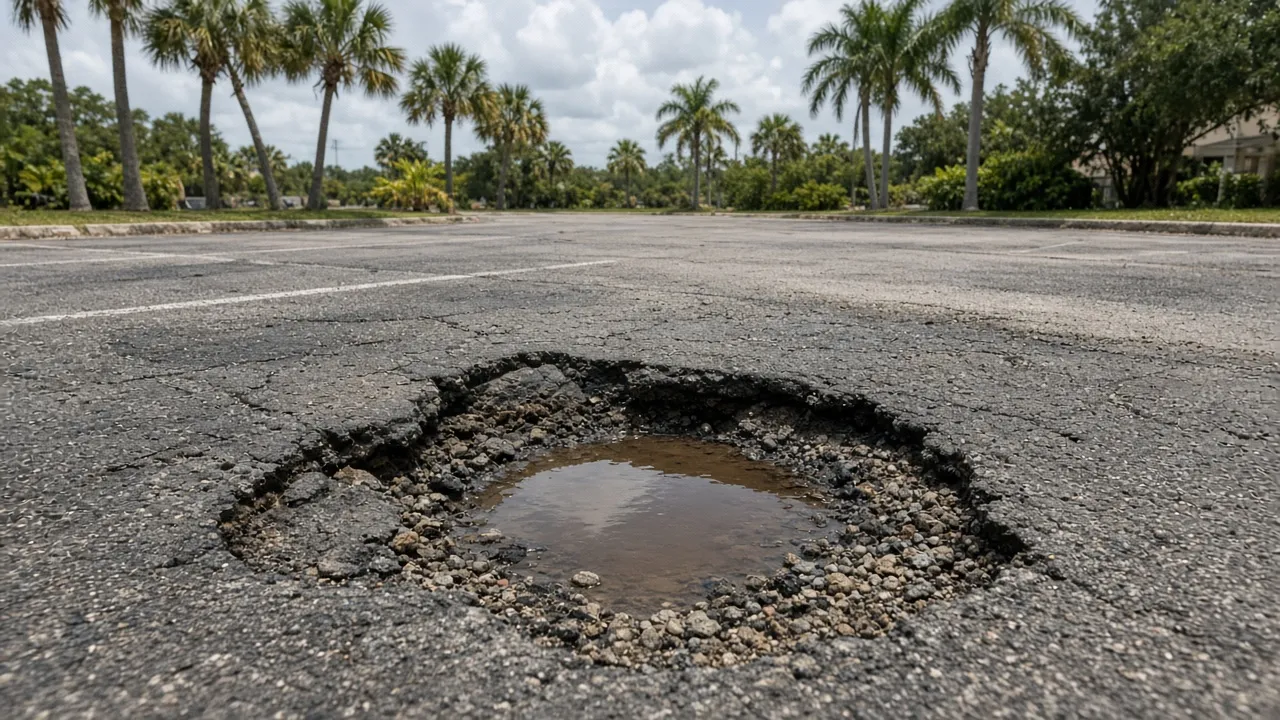
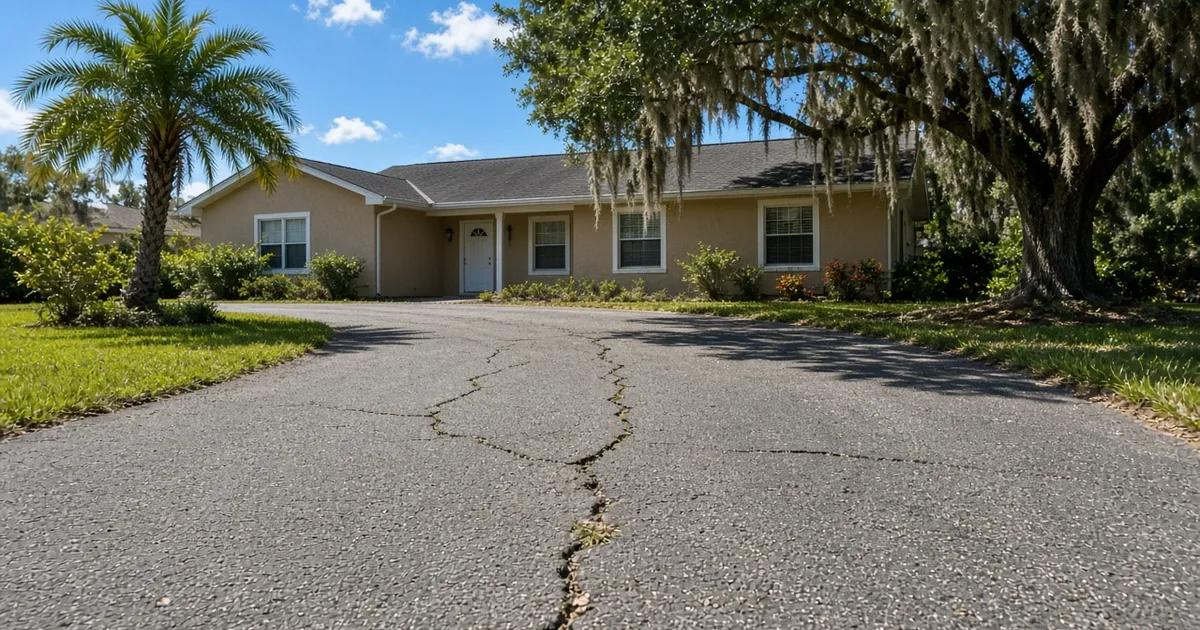
Illustration: a pothole in a Florida parking lot. Not an A1 Paving project.
Short answer: The cost to fill a pothole depends on its size and depth, the repair method (cold patch, hot mix, or a saw-cut patch), whether the base underneath has failed, drainage, how many potholes need work, and whether it’s a home driveway or a busy commercial lot. Sometimes a patch isn’t enough and the real fix is resurfacing or new paving. The only way to get a real number is an on-site look and a written estimate.
By Bill Cooper, A1 Paving, based in Polk City, FL.
Potholes show up fast in Central Florida. Whether it’s a driveway in Lakeland, a church or office lot in Polk City, or a retail property in Orlando, a small hole can turn into a trip hazard, a tire-damage complaint, and a much bigger repair if it’s left through a rainy season. This guide explains what actually drives the price of pothole repair, so you know what you’re paying for before you call a contractor. For the service itself, see A1 Paving’s asphalt sealing and patching service.
What causes potholes in the first place?
A pothole starts when water gets through cracks in the asphalt and weakens the base below. Traffic then pushes down on the soft spot until the surface breaks apart and pieces get carried away. That’s why the hole you can see is often smaller than the damaged area around it, and why the base matters so much to the cost.
What factors drive pothole repair cost?
No two potholes are priced the same. These are the main things a contractor looks at:
- Size. A wider hole needs more material and more labor to cut, clean and compact.
- Depth. A shallow surface hole can often be patched in the asphalt layer alone. A deep hole that reaches the base or soil needs more material and more preparation.
- Repair method. A cold patch, a hot mix patch, and a saw-cut (full-depth) patch take very different amounts of time, equipment and material (see the next section).
- Base damage. If the stone base or soil under the asphalt is soft or washed out, it has to be dug out and rebuilt before new asphalt goes on. This is often the biggest difference between a quick fix and a larger repair.
- Drainage. If water keeps pooling in the same spot, the patch will fail again. Fixing low spots or water flow can be part of the job.
- Number of potholes. Several potholes on one property can usually be done in one visit, which is more efficient than calling a crew out for each one separately.
- Driveway vs. commercial lot. A residential driveway is a different job from a commercial lot that carries delivery trucks and needs to stay partly open for customers.
- Access and traffic control. Busy lots may need cones, barricades, or work scheduled after hours to keep people and cars safe.
- Condition of the rest of the pavement. If the asphalt around the hole is cracked and worn, the contractor may recommend a wider repair, crack filling, or sealcoating at the same time.
A contractor who gives you a price over the phone without seeing these things is guessing. A site visit lets them measure the hole, check the base, and look at drainage before writing an estimate.
Cold patch vs. hot mix vs. saw-cut patch: what’s the difference?
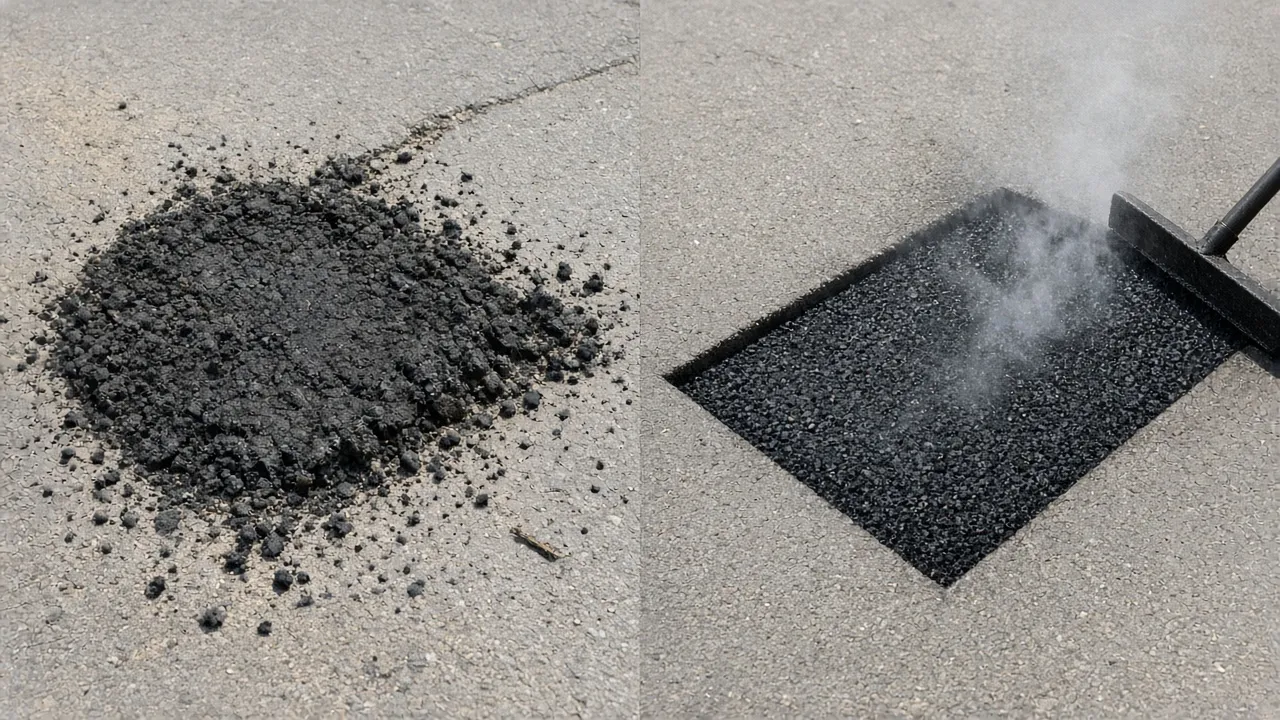 Illustration: a loose cold patch fill (left) compared with a saw-cut patch being filled with hot mix asphalt (right). Not an A1 Paving project.
Cold patch
Cold patch is a ready-to-use asphalt mix sold in bags or buckets. It’s poured into the hole and tamped down. It’s meant as a temporary fix to make a hole safe until a proper repair can be done. It’s quick and needs little equipment, but it usually doesn’t bond well with the old pavement or hold up long under heavy traffic and rain.
Hot mix patch
Hot mix asphalt is heated at a plant and placed while hot, then compacted with a roller or plate compactor. Done right, with the hole cleaned out and the edges tacked, it bonds with the surrounding asphalt and lasts much longer than cold patch.
Saw-cut (full-depth) patch
For larger potholes or areas where the base has failed, the damaged section is cut out in a neat square or rectangle with straight, vertical edges. Bad base material is removed and replaced, compacted, and then the area is filled with hot mix asphalt in layers and compacted again. This is the most thorough type of patch and takes the most work, but it fixes the cause instead of just filling the hole.
Is cold patch a permanent fix?
Usually not. Cold patch is designed for emergency and temporary repairs. It can buy you time, but in Florida’s heat and heavy rain it often loosens, pushes out, or washes away. For a lasting repair, most contractors use hot mix, and a saw-cut patch where the base is damaged.
When is a patch not enough?
Patching works when the problem is limited to a few spots and the rest of the pavement is in decent shape. It’s time to look at a bigger fix when:
- Potholes keep coming back in the same areas after being patched.
- Alligator cracking (a pattern of connected cracks that looks like reptile skin) covers large sections, which usually means the base is failing underneath.
- The surface is broadly worn, gray and cracked, not just damaged in one spot.
- Water pools across large areas because the pavement has settled.
- There are so many patches that the lot or driveway is more patch than original pavement.
In those cases, resurfacing (an overlay) or full replacement may cost more up front but stop the cycle of repeat repairs. A1 Paving’s asphalt paving service covers resurfacing and new paving. If your pavement is still sound, filling cracks and sealing it after patching helps keep water out. Our guide to driveway sealcoating in Lakeland and Orlando explains when sealing makes sense. On commercial lots, plan any parking lot line striping after patching and sealing are done.
How does Florida weather affect potholes and patches?
Central Florida doesn’t get the freeze-thaw cycles that cause potholes up north, but it has its own problems:
- Heavy summer rain soaks into cracks and softens the base, which is how most potholes start here.
- Strong sun and heat dry out and age the asphalt surface, so it cracks and lets more water in.
- Afternoon storms can interrupt repair work. Hot mix and sealcoat both need dry conditions, so contractors plan around the weather.
That’s why small cracks and holes in Polk County and Orlando-area pavement are worth fixing early, before a rainy season turns them into larger repairs.
Can I fix a driveway pothole myself?
For a small hole in a home driveway, a bagged cold patch can make it safer for a while. Clean out loose material and water, fill the hole slightly above the surface, and compact it firmly. Treat it as temporary. If the hole is deep, keeps coming back, or is on a commercial property where people and vehicles are at risk, a professional hot mix or saw-cut repair is the better choice.
What should you ask a pothole repair contractor?
Before you hire anyone, ask:
- Which repair method will you use, and why? Cold patch, hot mix, or a saw-cut patch.
- Will you check and repair the base? Ask what happens if the base is soft once the hole is opened.
- How will you handle drainage if water is pooling where the pothole formed?
- Is the estimate written, and does it list the areas, the method and what’s included?
- When can the area be used again, and what should you do to protect the patch afterward?
- Are you licensed and insured to work on your type of property?
A good contractor will answer these clearly and explain whether patching, sealing, or paving is the right fix for your pavement.
Areas A1 Paving serves
A1 Paving is based in Polk City and provides asphalt patching and pothole repair in Lakeland, Polk City and across Polk County, as well as Orlando and the surrounding Central Florida area. Free estimates are available.
Conclusion
The cost to fill a pothole comes down to its size and depth, the repair method, the condition of the base, drainage, how many holes need work, and the type of property. Cold patch is a temporary fix, while hot mix and saw-cut patches are built to last. If potholes keep returning, resurfacing or paving may be the smarter investment. If you own or manage pavement in Lakeland, Polk City or Orlando, request a free estimate or call A1 Paving at (407) 966-5164.
Frequently asked questions
How much does it cost to fill a pothole? It depends on the size and depth of the hole, the repair method, whether the base underneath needs rebuilding, drainage, how many potholes are being fixed, and whether it’s a driveway or a commercial lot. An on-site estimate is the only way to get an accurate price.
Is cold patch permanent? No. Cold patch is meant as a temporary repair. Hot mix asphalt, and a saw-cut patch where the base is damaged, last much longer.
Can I fix a pothole in my driveway myself? You can make a small hole safer with bagged cold patch, but treat it as temporary. Deep or recurring potholes need a professional repair.
When should I pave instead of patch? When potholes keep coming back, alligator cracking covers large areas, or the pavement is worn out overall, resurfacing or replacement is usually the better long-term fix.
Why do potholes form so often in Florida? Heavy rain soaks through cracks and weakens the base, and strong sun ages the asphalt so it cracks more easily. Traffic then breaks the weakened surface apart.
Should I sealcoat after a pothole is repaired? If the rest of the pavement is sound, crack filling and sealcoating after repairs help keep water out. Patch first, then seal.
Does A1 Paving repair potholes in Lakeland and Orlando? Yes. A1 Paving, based in Polk City, repairs potholes and patches asphalt in Lakeland, Polk City, Polk County and Orlando, and offers free estimates.
Next step
Plan your project
Share the property location, intended use, and current surface condition, and A1 Paving will review the site and provide a written estimate.